

Turning Workforce Research into Shop-Floor Strategy
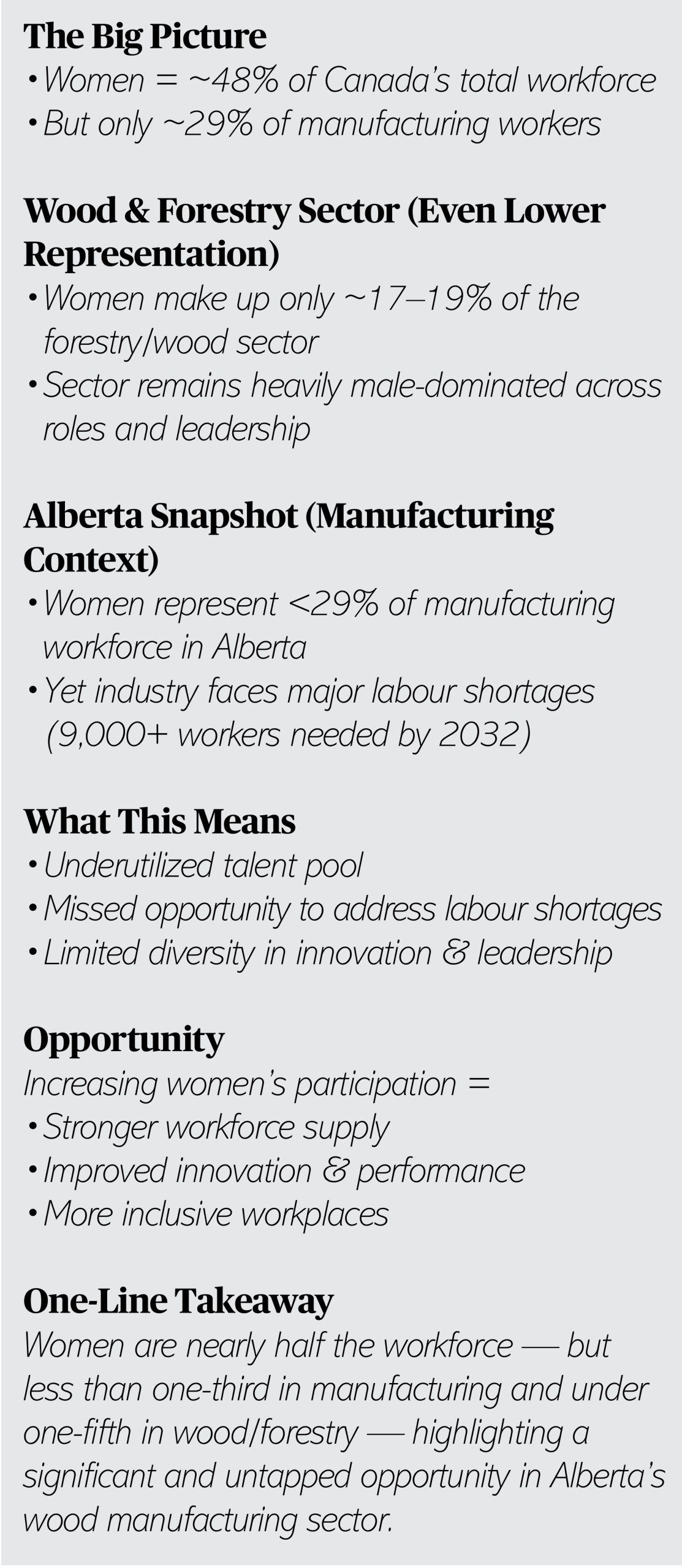 A recent pilot project supported by the Government of Alberta and led by the Wood Manufacturing Council (WMC) set out to answer a practical question for the woodworking industry: what actually helps attract and retain a broader workforce in small and mid-sized manufacturing shops?
The initiative, titled Building a Substrate for Diverse and Welcoming Woodshops, was conducted between April 2024 and March 2026. The project used a mixed, participatory approach that included interviews with prospective and early-career tradeswomen, co-creation workshops in Calgary and Edmonton, and walkthroughs of operating woodshops that examined facilities, workflow, equipment, and communication systems within Alberta.
Participants ranged from newcomers and recent training graduates to career-changers already working in the trades. Employers were also involved through shop visits and training-environment discussions. The goal was not to produce abstract commentary on workplace culture. Instead, the project translated findings into operational practices that companies can implement and measure.
Across interviews and workshops, researchers identified a cluster of barriers that affect workforce entry and retention: unclear hiring pathways, outdated onboarding practices, poorly fitted safety equipment, weak reporting systems, and limited visibility around advancement. These issues often interact to discourage capable workers from entering or staying in the industry. The report organizes solutions into five practical levers that shop owners can control: visibility and navigation for entrants, structured onboarding and mentorship, ergonomic design and PPE fit, clear reporting pathways, and transparent advancement systems.
 Making Entry Points Visible
One of the clearest findings from the pilot was that interest in woodworking jobs exists, but the pathway into the industry is often difficult to see.
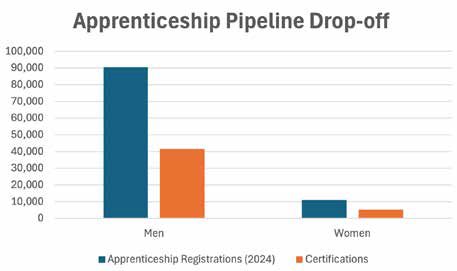
Hiring in the trades frequently relies on informal networks and word-of-mouth referrals. While this works well for established insiders, it unintentionally reproduces the demographics of the existing workforce. Many women interviewed during the project said they were interested in hands-on shop work but were unsure where to begin.
Simple changes in recruitment practices can make a significant difference:
• Write job postings that clearly describe daily tasks rather than vague personality traits.
• Avoid insider language that assumes prior shop experience.
• Use gender-neutral language when advertising general labour or entry-level roles.
• Include a woman in the interview process when possible to give candidates a clearer picture of the workplace.
These adjustments require little investment but signal that a shop is serious about welcoming new entrants.
 Stabilizing the First 90 Days
The research also highlighted the importance of structured onboarding. Many small shops rely heavily on supervision rather than formal training. While experienced employees can often infer expectations through observation, new entrants — particularly those without prior shop exposure — may struggle to interpret informal rules.
A structured first-90-day framework can stabilize the learning process.
Effective onboarding systems often include:
• A buddy or point-of-contact for routine questions
• A simple learning sequence that introduces machines and tasks gradually
• Clear explanations of shop norms, safety expectations, and workflow
• Opportunities for peer connection, not just supervision
When new employees know where to turn for help and how their skills will develop, technical learning becomes much easier.
Designing Workspaces That Fit the Worker
Physical safety discussions in manufacturing often focus on large equipment investments, but the pilot found that smaller ergonomic adjustments frequently deliver broad benefits.
Many shops discovered that standard safety equipment does not fit the full range of workers on the floor. Providing properly sized gloves, adjustable workstations, and ergonomic lifting aids reduces fatigue and injury risk for everyone.
The research also emphasized the operational importance of basic facilities. Lockers or private storage space, and provision of adequate women’s washroom facilities on site.
Turning Reporting into a Workflow
Psychological safety — the ability to raise concerns without fear of retaliation — was another consistent theme across interviews.
In many shops, reporting mechanisms exist informally but rely on personal relationships. New employees must figure out who to approach, when to speak up, and whether raising an issue might harm their standing.
Clear systems reduce that uncertainty.
Practical examples include:
• A confidential reporting pathway for workplace concerns
• A peer-nominated safety representative
• Short respectful-workplace refreshers that clarify expectations
• Anonymous pulse surveys to identify problems early
These tools do not lower performance standards. Instead, they remove ambiguity around how concerns are handled.
Clarifying Advancement Pathways
Retention also depends heavily on whether employees can see a future in the industry.
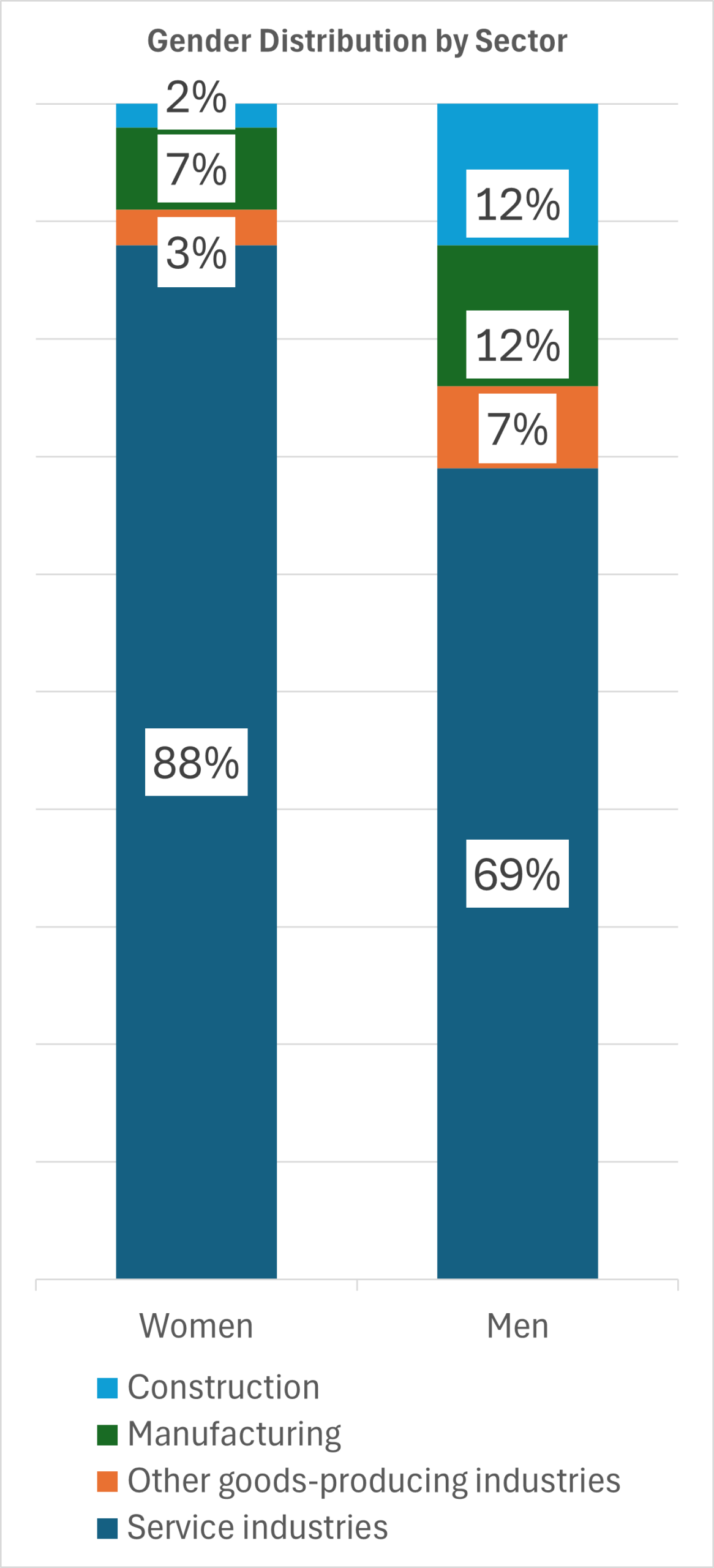
The pilot found that advancement is often framed too narrowly as moving into management. Many skilled workers instead want deeper technical capability, broader machine expertise, or opportunities to mentor others.
Clear progression systems can make these possibilities visible.
Examples include:
• Publishing a simple role ladder (labourer apprentice journeyperson)
• Providing a one-page apprenticeship quickstart guide explaining registration, funding, and exams
• Assigning mentors to apprentices for logbook completion
• Offering paid study time where feasible
When progression pathways are transparent, employees are more likely to remain and build long-term expertise within the shop.
Policy Often Matters More Than Equipment
One unexpected insight from the pilot was that retention decisions often hinge more on policies than equipment.
Scheduling flexibility emerged repeatedly in interviews. Many workers — particularly those balancing caregiving responsibilities — said that rigid scheduling made long-term employment difficult. Shops that acknowledged these realities through clear policies tended to retain employees more successfully.
Similarly, transparent expectations around progression, mentorship, and communication proved more influential than isolated workplace upgrades.
The common thread is clarity. When employees understand how the workplace operates and how their role can evolve, stability improves.
Building Stronger Wood Manufacturing Workplaces
The Wood Manufacturing Council’s Alberta pilot did not uncover a long list of revolutionary ideas. Instead, it demonstrated how everyday operational decisions shape who enters the industry and whether they stay.
Recruitment language, onboarding systems, workspace design, reporting structures, and advancement pathways all influence workforce participation. When these systems are intentionally designed, shops become more accessible to a broader range of skilled workers.
For an industry facing ongoing labour shortages, these changes represent more than diversity initiatives. They are practical strategies for building stable, high-performing teams.
Through projects like this pilot, the Wood Manufacturing Council continues to highlight how diversity and inclusion can strengthen the long-term competitiveness and resilience of Canada’s wood manufacturing sector.