

AWMAC convention puts standards, data and documentation at centre of industry performance
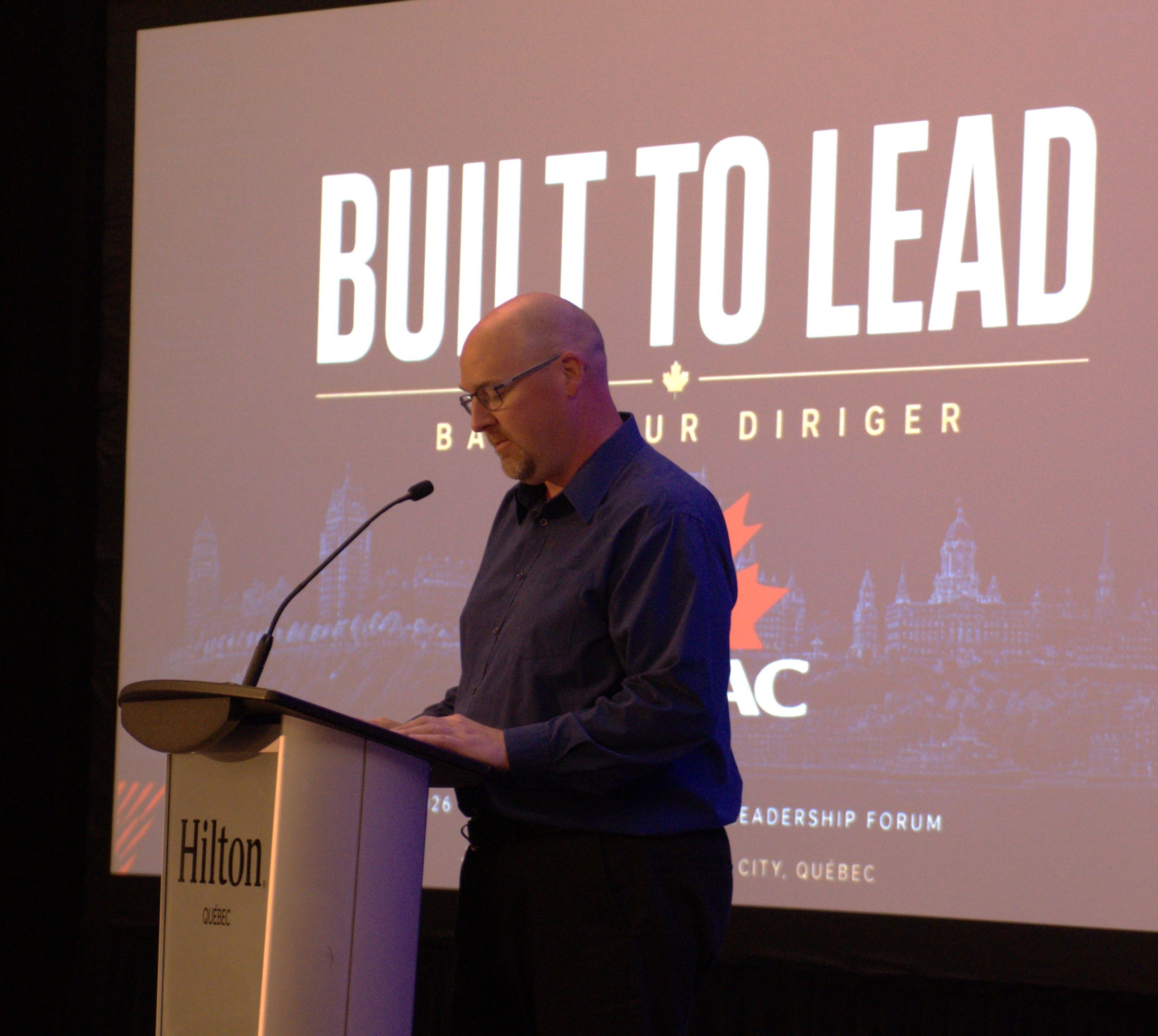
By Friday morning at AWMAC’s 2026 National Convention in Québec City, the discussion had moved quickly from the formal launch of NAAWS 5.0 to the conditions that decide whether an architectural woodwork project runs cleanly: drawing quality, release information, material readiness, shop capacity, submittals, samples, site conditions and the ability to find the right standard before a question becomes a dispute.
The convention, held June 11–13 under the theme Built to Lead, brought manufacturers, suppliers, inspectors, specification writers, architects and association leaders into the same room at a moment when the industry is being asked to manage more complexity with less tolerance for error. In his opening remarks, AWMAC National President Mark Whitman described one of the association’s strengths as “the ability to bring people together” across the project chain. This year, that gathering had a practical centre of gravity: how standards, documentation and business systems are becoming part of daily competitiveness.
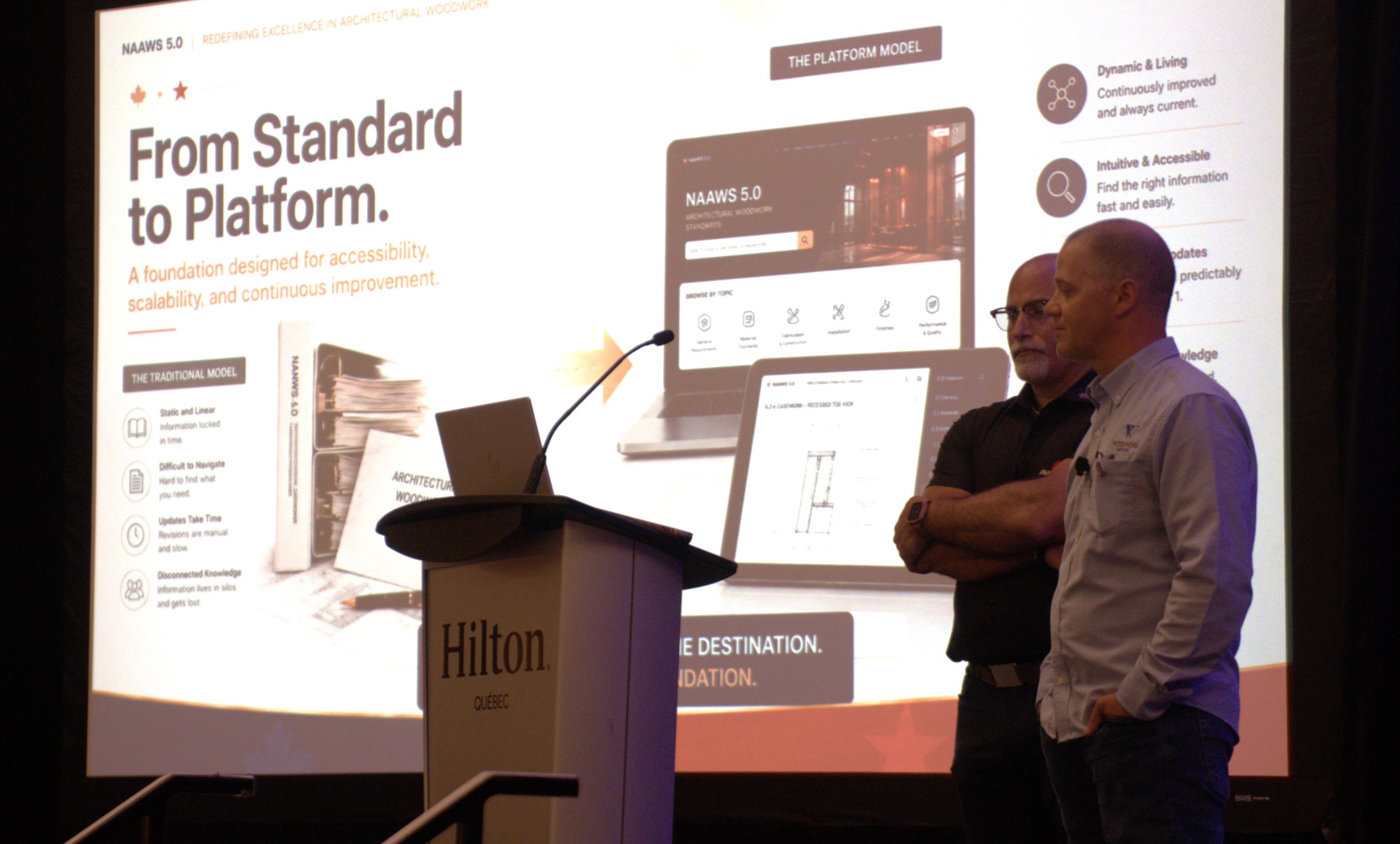
The launch of NAAWS 5.0 gave the convention its technical foundation. Nick Anastas of AWMAC Ontario and Tim Stolo of the Woodwork Institute presented the new version not as a static manual, but as a digital platform intended to keep the standard more accessible, searchable and responsive to industry feedback. The system allows users to search, bookmark sections, submit article-level suggestions and work from current information as updates and corrections are made. During the session, the presenters described NAAWS 5.0 as “not a finish line” but “a foundation,” language that was repeated later in the convention as AWMAC discussed standards, GIS, education and member engagement as connected priorities.
The digital shift does not remove the need for standards literacy. In fact, the NAAWS presentation made the opposite point. Search improves access, but users still need to understand how sections relate to one another, where fundamental requirements sit and how material, fabrication and installation expectations connect. A faster manual does not help much if users treat it as a collection of isolated answers. The standard still requires training, judgment and context.
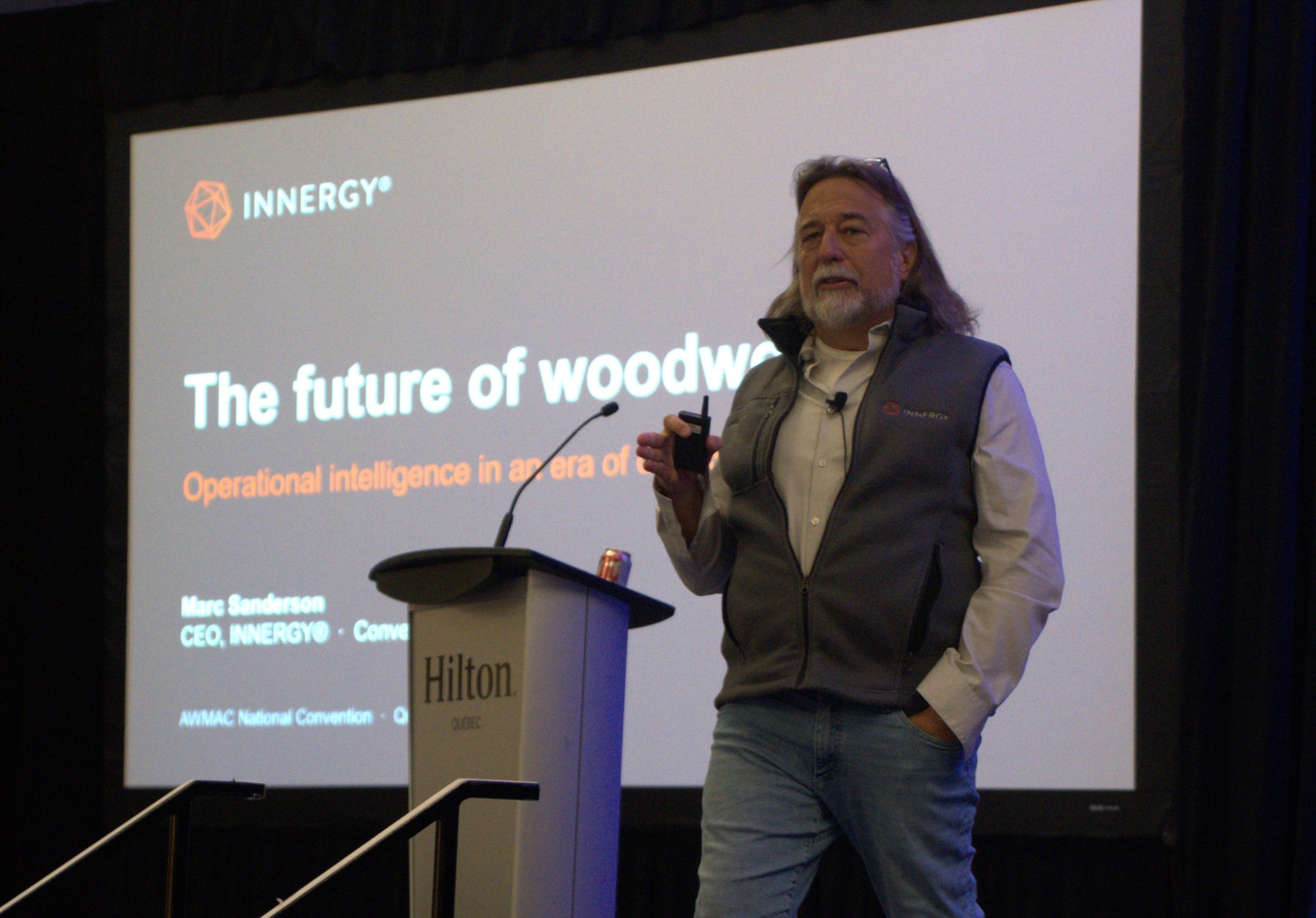
Marc Sanderson, CEO of INNERGY and former owner of Wilkie Sanderson, pushed the same theme from the business side. His keynote argued that the future of competitiveness is less about machinery alone and more about the information that reaches the shop before production starts. He repeatedly drew a line between “ones and zeros” and sawdust: project data, estimating, release discipline, customer selection and workflow on one side; fabrication and installation on the other. “We don’t take percentages to the bank,” he told delegates. “We take profits to the bank.”
Sanderson’s point was not that craftsmanship no longer matters. It was that margin is often created or lost before the first part is cut. In his examples, late RFIs, incomplete shop information, unclear customer expectations, bad release packages and weak project selection created problems that later appeared as shop-floor or site failures. In the lunch session, he described a complex lobby project where his company changed the conversation before award by proposing a different construction approach, taking more control of framing logic, embeds, raceways and coordination. The company was more expensive, he said, but it had identified risks the customer had not yet priced. “If you’re not happy with the input that you’re getting… then change it,” he told the room.
That emphasis on upstream control was reinforced in the design and specification sessions. Dan Gallivan of Diamond Schmitt Architects spoke from the architect’s side and was direct about the decline he has seen in documentation quality. He described pressure on architectural teams, junior staff producing millwork drawings without enough exposure to materials or site work, and BIM processes that can generate more drawings without improving explanation. His most concise diagnosis was also the most useful for the room: “We generally overdraw. We overdraw and under-explain.”
Camille King of Brian Ballantyne Specifications narrowed the issue further. Her session reminded manufacturers that drawings and specifications are not interchangeable documents. “The drawings say where, and the specs say what,” she said. She urged firms to read beyond the millwork section, especially Division 01, where submittal procedures, mockups, samples, warranties, substitutions and closeout requirements may be defined. For woodwork firms, that is not paperwork for its own sake. It is where risk, approval and responsibility are often established before fabrication begins.
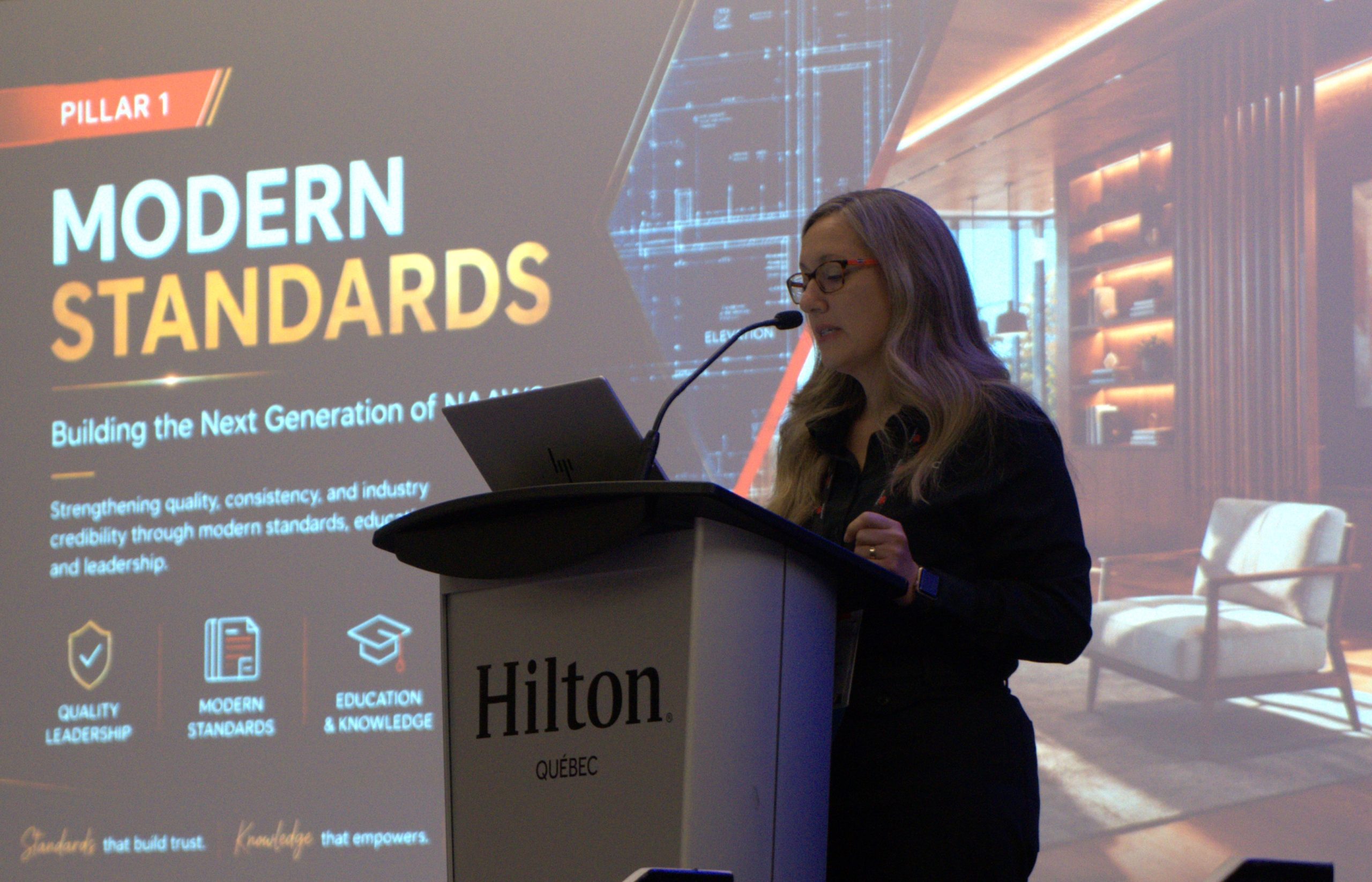
The Guaranteed Inspection Service session moved the same discussion into quality assurance. Kasia Robinson, AWMAC’s director of standards, inspections and insurance, framed GIS not as a reporting burden but as a business tool. “Most major project problems don’t really begin as major problems,” she said. “They usually start off with really small issues.” Her examples included incomplete information, unclear expectations, missed follow-up and undocumented decisions that later become deficiencies, disputes or delays.
Robinson encouraged manufacturers to build GIS habits into normal operations: stronger submittal templates, scope clarification checklists, written decisions, deficiency response processes, site-condition documentation and consistent communication records. Her argument was that GIS has more value when used before a problem hardens into a claim. It can help manufacturers demonstrate compliance, protect themselves from avoidable disputes and explain value to clients who may otherwise see inspection only as a fee.
 The convention also widened its frame beyond company systems. Pascal Chan of the Canadian Chamber of Commerce placed architectural woodwork inside a broader manufacturing environment shaped by tariffs, supply-chain disruptions, transportation reliability, labour stoppages, internal trade barriers and low business investment. “We’re a trading nation,” he said, noting that trade accounts for a major share of Canada’s economy. For woodwork firms, those pressures show up in material availability, cross-border pricing, delivery timing and the confidence required to invest.
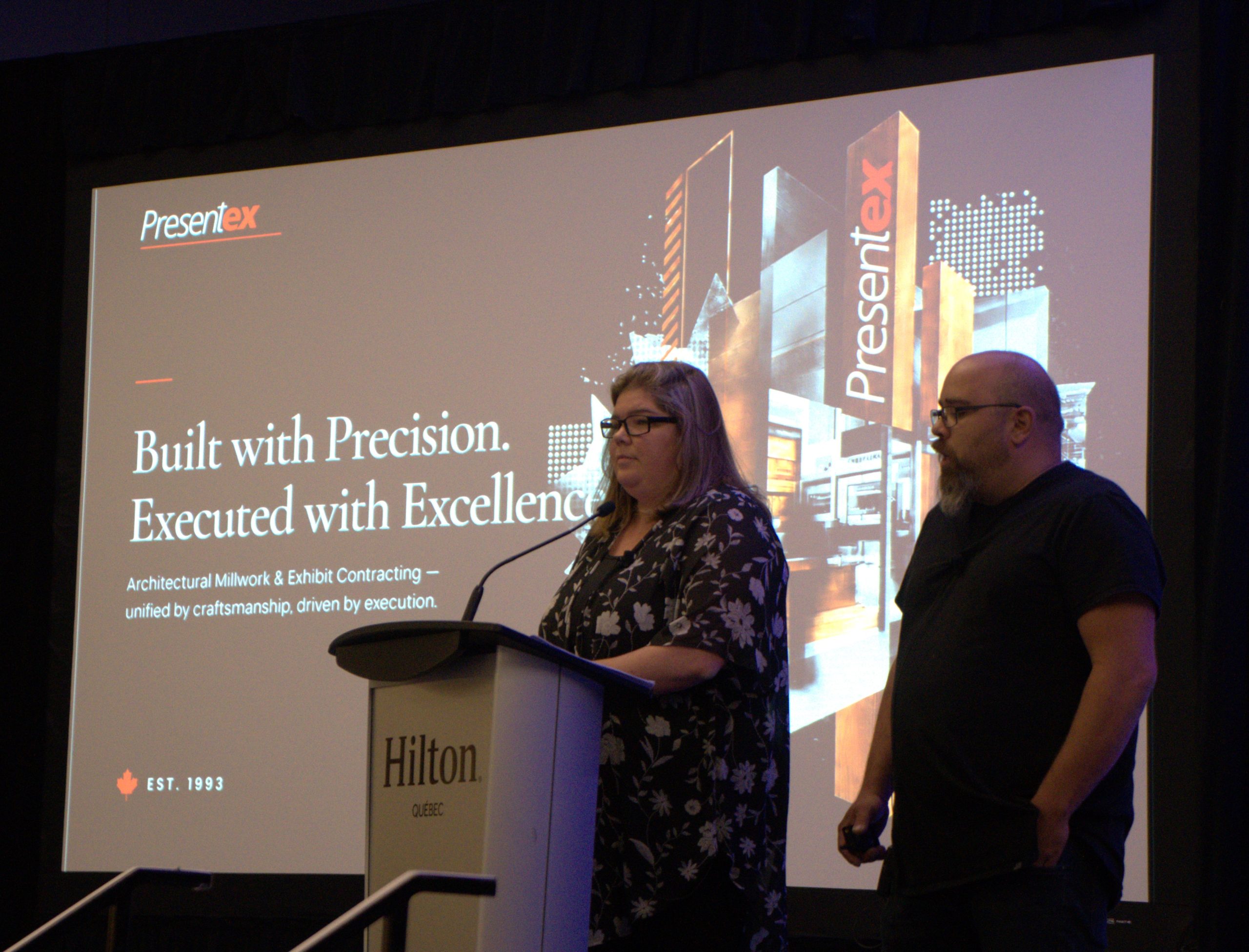
The closing sessions brought the conversation back to company leadership. Daniel and Angela Theriault of Presentex Canada described the company’s movement from trade show and exhibit work into broader commercial and architectural millwork after the pandemic disrupted its core market. Their story was less about reinvention than about estimating discipline, phased equipment investment and understanding true cost. “Selling a job without making money is pointless,” they said. “Growth cannot happen without a realistic return.”
In the leadership forum that followed, growth was discussed through customer selection, succession, culture, process documentation and bottlenecks. Panelists returned repeatedly to the need to move knowledge out of owners’ heads and into people, systems and records. That gave the leadership discussion a practical edge. It was not about personality. It was about whether a company can keep making sound decisions when volume increases, ownership changes or work moves through more layers of management.

Carolynne Yeomans, AWMAC National Executive Director, closed the convention by connecting those threads at the association level. NAAWS 5.0, GIS modernization, education, governance, digital learning, chapter alignment and member engagement were presented as parts of a larger effort to strengthen national consistency and credibility. “What we are building is not a collection of isolated projects,” she said. “It’s a stronger, more connected organization designed to support the future of our industry in a much more coordinated and sustainable way.”
That may be the clearest reading of the convention. Architectural woodwork still depends on material knowledge, fabrication skill and installation judgment. But the work around the work is carrying more of the risk: standards literacy, release discipline, estimating accuracy, documentation, communication and quality assurance. In Québec City, AWMAC’s message was not that these systems replace craft. It was that they increasingly determine whether craft can be delivered predictably, profitably and with enough confidence for the next project to begin on stronger ground.
 Tyler Holt is the Editor of Wood Industry / Le monde du bois magazine. He has a master’s degree in literature and publication, and years of experience in the publishing and digital media industry. His main area of study is the effect of digital technologies on industrial and networked production.