
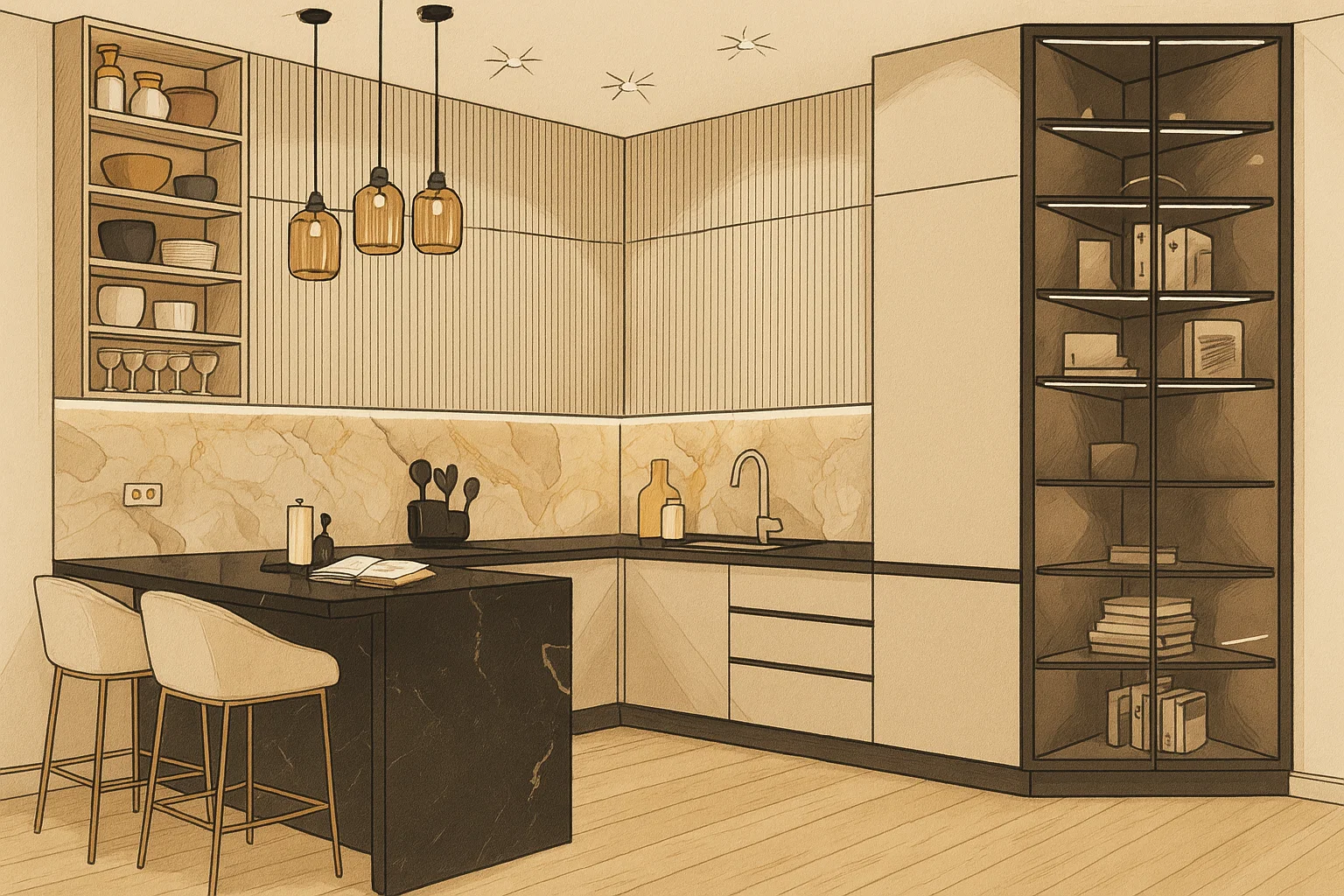
Nine Points to Consider When Looking for Retail/ Showroom Space
Much of the space zone for industrial leaves cabinet and furniture manufacturers isolated from foot traffic, or even traffic in-general. While having a showroom space at your place of production is a must-have, many successful businesses also look for centralized showroom space to expand their presence.
Choosing a location for your retail store or showroom requires careful planning and contemplation. From understanding local demographics and consumer behaviour to assessing the impact on online sales, each aspect plays a crucial role in the success or failure of your retail showroom.
Whether struggling with foot traffic and conversions, looking to add a location, relocate an existing space or about to open a new one, here are often-missed factors to retail success. By giving thorough attention to these pillars, you set the stage for an environment that resonates with your brand, financial goals and long-term vision. Remember your location is not just where you do business; it’s a vital part of how you do business.
Foot Traffic
Think of foot traffic as the heartbeat of your store; no heartbeats, no life. A bustling area can be like a 24-7 advertisement for your brand. However, there are other factors more important than volume. It’s the quality of that traffic.
Is this a place where your ideal customer hangs out or passes by?
It isn’t foot traffic alone that you must consider; it’s traffic speed, too. You can have a high traffic count on the street, but if the average speed limit is 50 kilometres an hour or more, the street serves as a commuter space to get people where they’re going. A slower downtown area allows more vehicular sightseeing but can have lower car traffic. The ‘right place at the right time’ isn’t just a saying; it’s your bottom line.
Demographics
Knowing your customer is like having a backstage pass at a concert; it gets you up close and personal with the star of the show — your target audience. Review local demographics meticulously.
Are these folks your target age group, income level and lifestyle?
A mismatch between your offerings and the immediate population can be as awkward as wearing a tuxedo to a beach party.
Competition
Proximity to your competitors is a double-edged sword. Being too close might create market saturation, making it hard for anyone to stand out. On the flip side, being near similar businesses could also generate more foot traffic, as the area becomes a known destination for your particular type of goods or services.
Accessibility
Think of your store’s accessibility as the front door to your customer’s journey. They’ll move on if they can’t find that door or it’s too hard to open.
How easy is it to get to your store? Is parking a hassle or breeze? What does it take to get into your shopping centre? (People rarely make U-turns for a business.) What is the ingress like into your centre? And how hard is it to get out?
Let’s not forget public transportation; you want your store to be as accessible as a catchy tune stuck in the minds of your customers.
Cost-benefit Analysis
This is your classic ‘scales of justice’ scenario. On one side, place all the costs — rent, utilities, maybe even renovations. On the other, stack your potential earnings. If the earnings tip the scale, you’re in a win-win situation. But if costs weigh you down without a plan to grow sales, you’ll swim upstream without a paddle.
Better locations cost more for a reason. When you upsize your location, you do the same with your customer service. And if you get a lower rent, realize it is for a reason, too. You’ll probably have to pay people to come to your shop via discounts and offers, so factor that in as well.
Healthy Competition
Don’t be afraid of a competitor. A little rivalry can be good, as it draws more customers to the area. Just be clear with your vendors if they have exclusives or line agreements.
Zoning Laws
Zoning can be a silent killer; it’s the iceberg to your Titanic if you’re not careful. You must ensure any particular restrictions are consistent with your business model. The most common are sign laws but could also include blue laws for your city. While less common these days, blue laws restrict or hinder certain activities, particularly the sale of specific goods or services, on a particular day of the week. Always get regulations in writing with legal advice.
Lease Terms
Leases can be as binding as marriage and complex like a Rubik’s Cube. You don’t want to discover you’re stuck in a 10-year commitment when you were eyeing a five-year plan.
Examine the contract for flexibility on extensions, exit clauses and the costs included in that monthly payment. Using a chatbot and virtual assistant like ChatGPT can help clarify who has the upper hand in a contract. Ample parking can be a significant advantage as well.
Data-driven Decisions
Data is crucial. It provides actionable insights, helping you better understand consumer behaviour, demand to support a new location, proximity to your own stores, impact on your online store, and more.
Knowledge of how consumers interact with your store can help optimize your stock and services.
Conduct thorough market research to assess the demand for your products or services in the new area.
If your new location is within 20 minutes of one of your other stores, it’s easier to cover shifts. Beyond 45 minutes, this becomes challenging. But be cautious that the new location doesn’t cannibalize sales from another nearby store.
Closing a physical store, even if opening a new one, often leads to a reduction in online sales. Competitor Monitor, a price monitoring service, reports online sales can dip as much as 50 per cent.
Bob Phibbs, known as the Retail Doctor, is a renowned expert in brick-and-mortar retail. As CEO, he provides international business strategy, customer service expertise, sales coaching and marketing mentorship. An author of three books and motivational speaker, Bob recently expanded his online retail sales training program, SalesRX. This on-demand platform has led 83 per cent of clients to achieve double-digit growth within six months.