
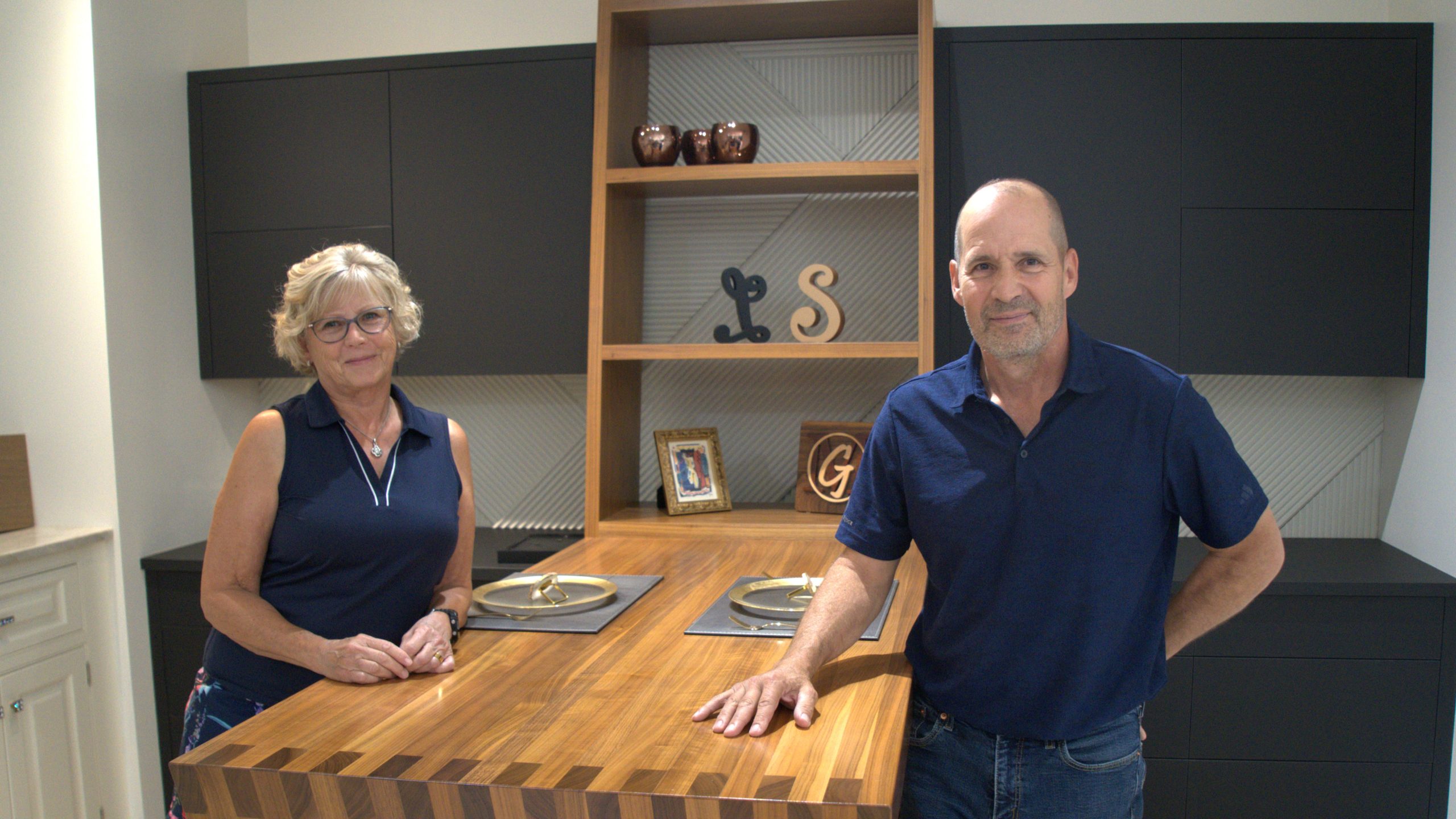
Greystokes Cabinetry and Millwork: Staying Close to the Work
By Joy Doonan, Wood Industry Writer
Lee Welch started building cabinets in his garage in 1989. More than three decades later, Greystokes Millwork operates from Vernon, B.C., but still works in a part of the market where a kitchen is often only the beginning of the job.
The British Columbia company has developed around high-end residential cabinetry and architectural millwork, with projects sometimes extending through 20 or 25 rooms in a single home. Kitchens, vanities, offices, built-ins, fireplace walls and other custom pieces may all move through the same shop.
The company still takes on some commercial work, but residential construction has become its main business. Many customers have historically come from Alberta to build second homes in the B.C. Interior, particularly around lake and resort communities. Changes affecting second-home ownership, including BC’s additional taxation on certain residential properties, have reduced some of that traffic.
Greystokes has adjusted without trying to push into higher-volume cabinet production. Its work frequently involves curved components, grain matching, unusual veneers, integrated architectural details and one-off pieces that fall somewhere between cabinetry, millwork and furniture.
![]() MEASUREMENT IS STILL A HANDS-ON JOB
Much of the risk in a whole-home millwork package appears long before material reaches a machine.
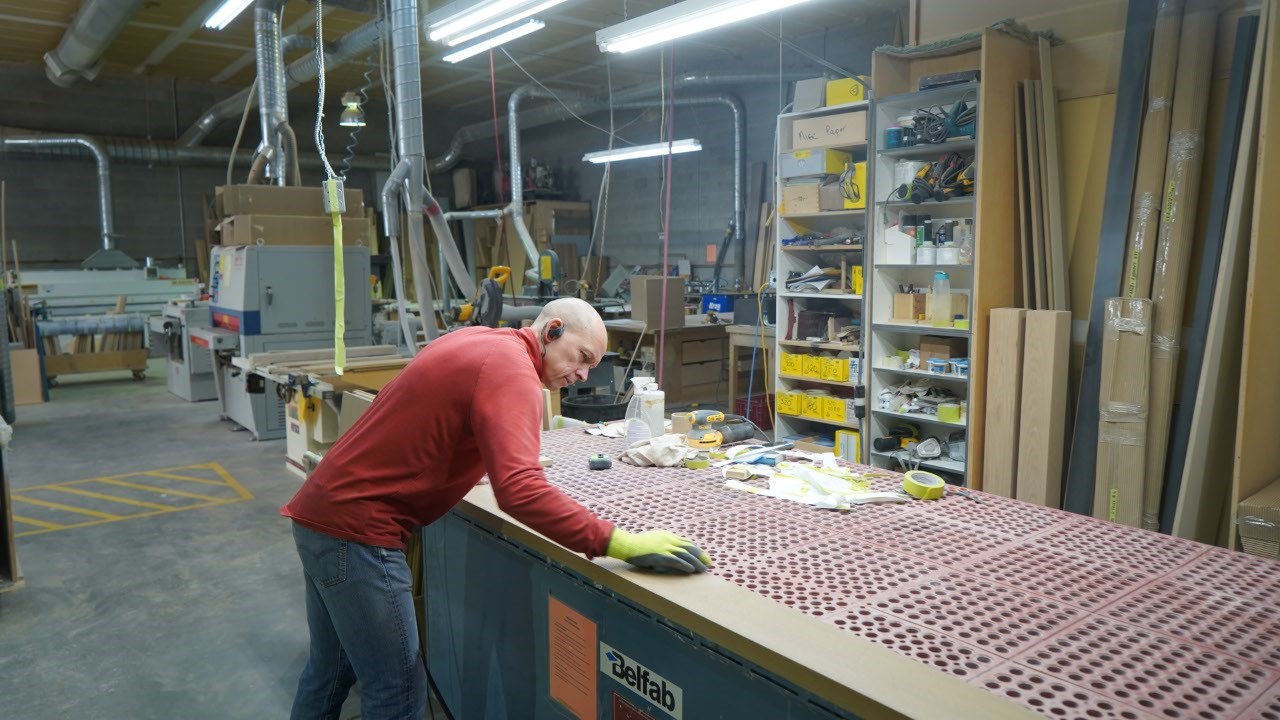
Owner Lee Welch still handles site measuring himself. That can mean multiple trips during construction, particularly as wall finishes, window trim, stone, electrical locations and other details develop. A backsplash specification that changes by an inch can affect the cabinet position in front of it. Drywall or electrical work may move after an earlier site visit.
The process remains deliberately direct. Cabinets are laid out against the building conditions, dimensions are checked, and the site is revisited as work progresses.
“Contractors aren’t always forthcoming in what they’re putting on a window for trim, or what they’re putting on a backsplash,” Welch says. “I’ve got to make sure I’m asking the right questions.”
Those long-standing trade relationships extend beyond the shop. Vernon-area builder Makasoff Construction publicly identifies Greystokes as its exclusive cabinetry supplier.
Installation receives similar attention. Greystokes uses long-standing subcontract installers, including contractors who work almost entirely with the company. Welch sees installation as part of fabrication rather than a handoff at the end of it. Poor installation can undermine work that was accurate when it left the shop.
Those relationships also feed new projects back into the business. Two of the company’s main building contractors use Greystokes exclusively, and referrals from contractors and past customers continue to produce more work than conventional advertising.
![]() MACHINERY CHANGED THE BOTTLENECK, NOT THE HEADCOUNT
By the mid-2000s, one of Greystokes’ largest constraints was labour.
Finding experienced shop workers with what Welch describes as “old-school talent” was becoming more difficult to find, particularly people capable of handling detailed millwork as well as conventional cabinet construction. The company could pay more for skilled employees and still struggle to keep them.
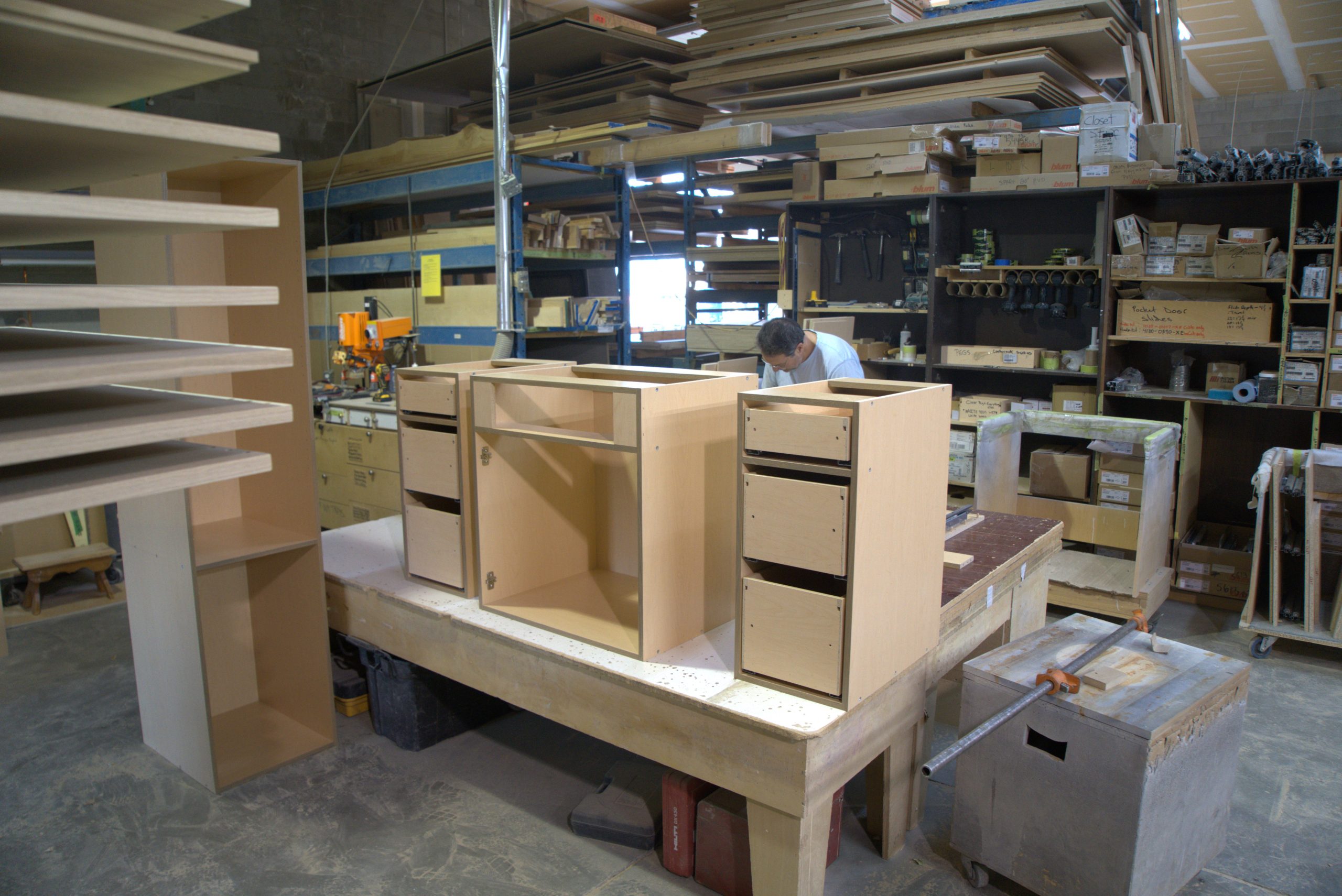
In 2006, Greystokes installed a Biesse nesting CNC.
“I was one of the first people to get a nested base CNC in the interior of BC, and it changed my whole outlook on life,” he says. “It didn’t take any people out of my shop. It just pushed things around to help the bottlenecks.”
The improvement has shaped the company’s use of automation since. The CNC took over repetitive panel processing and improved consistency, but it did not remove the need for cabinetmakers who could solve irregular construction problems at the bench.
For a company with fewer employees, Greystokes is a relatively machine-heavy operation. The shop has continued adding equipment, including an edgebander and drum sanders supplied by Akhurst, along with more specialized machinery.
![]() THE SKILLS MACHINES DO NOT REPLACE
Technology has eased some labour pressure, but it has also clarified what Greystokes still needs from cabinetmakers.
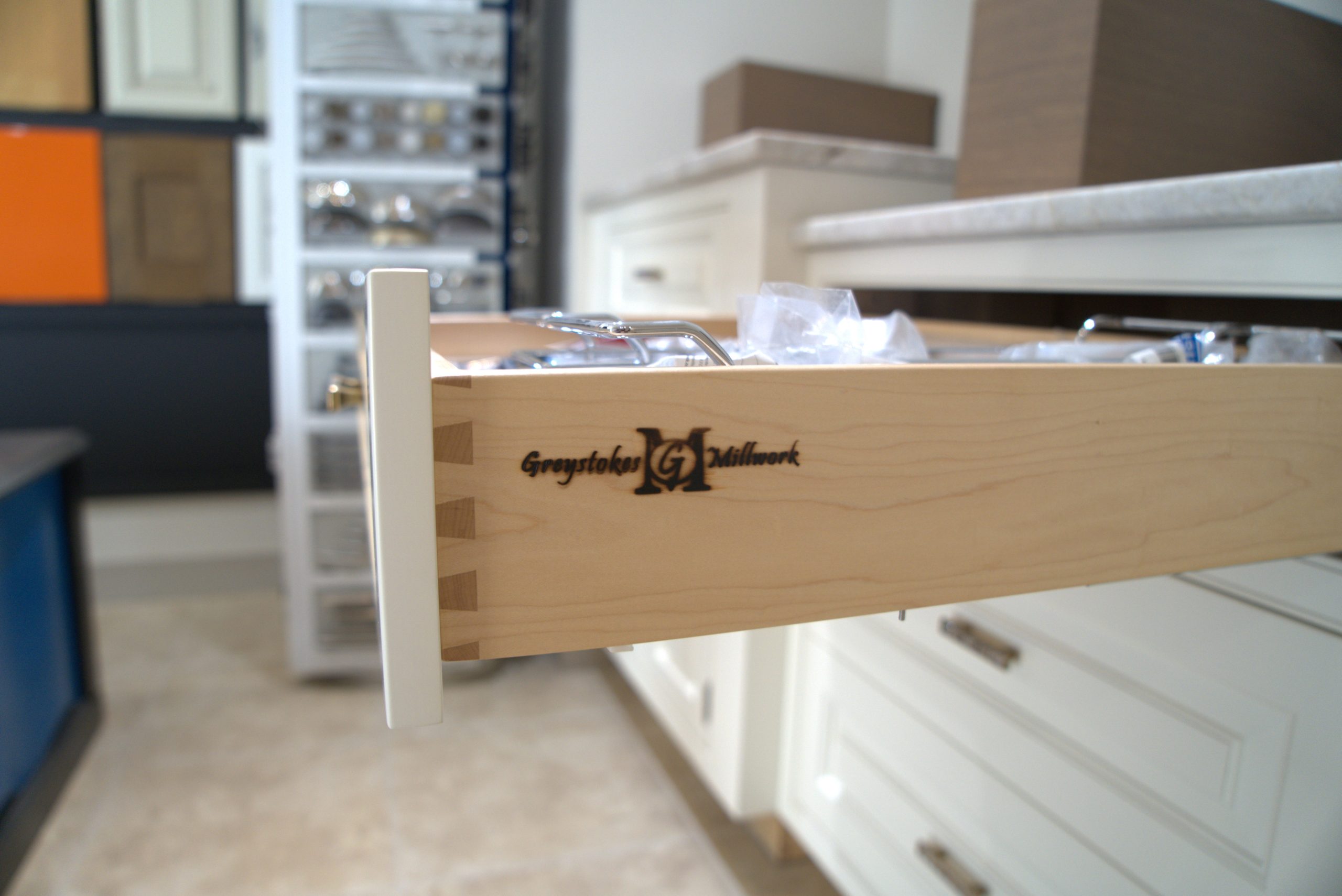
Welch is less concerned with training someone to cut dovetails by hand than with finding people who understand how materials behave and can build a curved hood, fabricate an unusual leg or work through a one-off architectural detail. CNC operation matters, but so does knowing what should happen after the part comes off the machine.
“We have to train anybody who wants to be in the millwork,” he says.
The company has trained enough people that several former employees have gone on to open competing businesses. One later wrote to Greystokes to say that he would not have succeeded on his own without the years he spent there. “I take pride in that,” Welch says.
“Few people understand the finishes, the chemistry behind staining, making sure that the product lasts. We have customers who keep returning to us after 20 years,” Welch adds.
KEEPING THE COMPANY AT A WORKABLE SIZE
Greystokes now has seven employees, with Welch’s two sons involved in the business. Ryan works as foreman running the shop, while Dustin handles much of the company’s IT and design. Their involvement is also the company’s succession plan.
The transition has not meant removing Lee from production. He still measures projects, moves through the shop and watches pieces being built. His role has gradually shifted from doing every operation himself toward supervising and teaching the people who now do them.
“I don’t think I could do my job administering the business if I couldn’t still go back into the shop and see it being done,” he says.
That connection also helps explain why Greystokes has resisted becoming substantially larger.
Welch acknowledges that greater scale could produce more revenue, but it would also require more administration, more employees and additional overhead. For a company built around one-off custom projects and close supervision, those additions would change how jobs move through the business.
“We’ve done well for ourselves. It’s a good life,” he says. “But to make a lot of money in this business, we would ultimately have to increase overhead and screw up our customer service. So we have been happy to stay the size we are.”
After 37 years, the shop is still balancing modern production equipment with work that cannot be fully standardized. The CNC handles what it should. Experienced people handle what it cannot. And Welch still goes back to the shop floor to make sure the two meet properly.