
My Door Factory’s Operating Discipline Starts Before the First Door Is Made
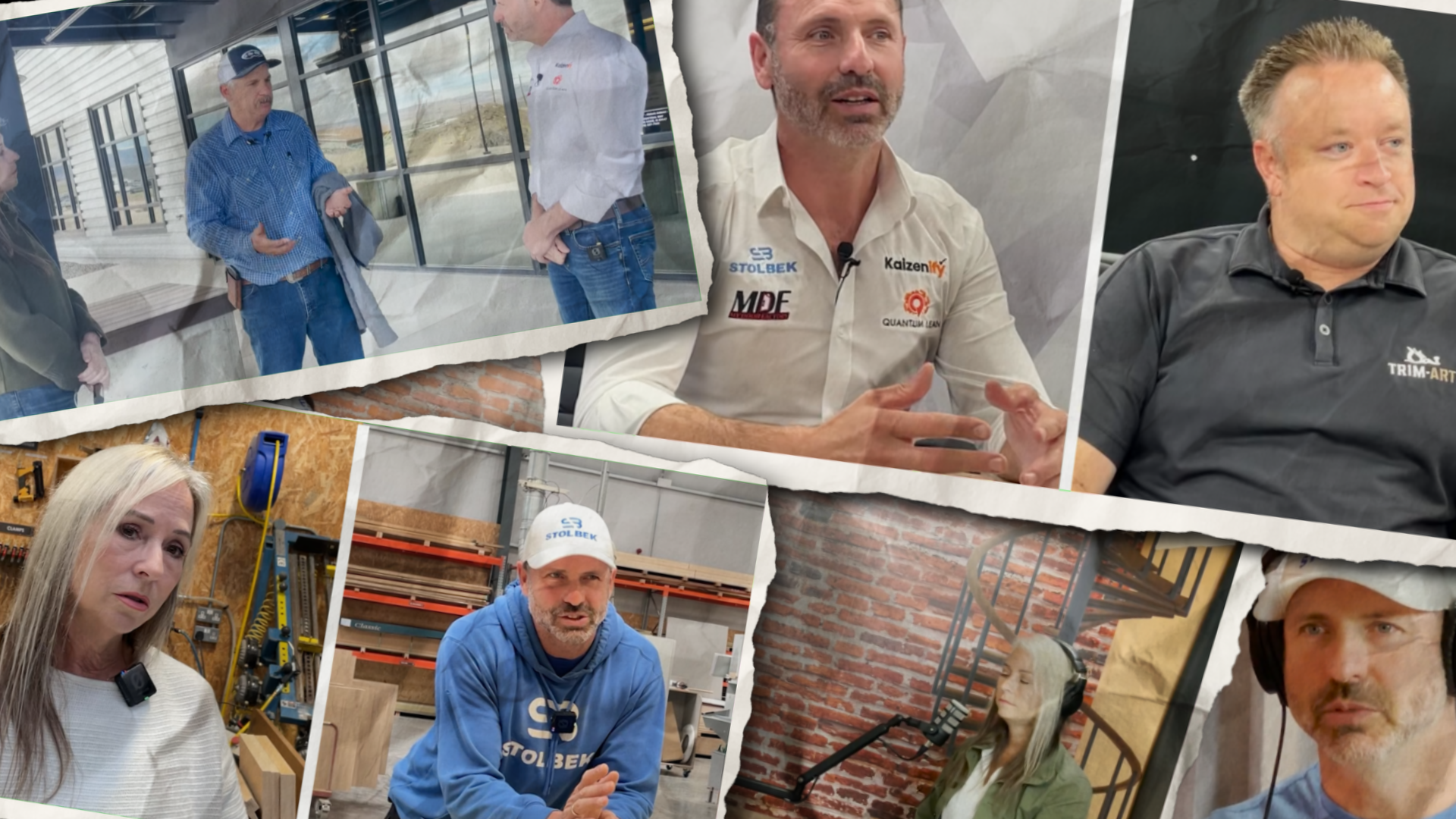
The first hour of the day at My Door Factory is not reserved for cutting, sanding or shipping doors; it starts with improvement work. Employees get time in the shop to fix what made yesterday harder than it needed to be. After, The group meets, reviews improvements, talk through issues, express gratitude, discuss what they are reading and, more recently, make room for a “confession” segment where people identify mistakes or decisions they would handle differently next time.
For Brad Cairns, who founded the company after earlier work in custom carpentry, commercial millwork and cabinetry, that hour is not a cultural add-on, but a part of the operating system. My Door Factory’s position in the MDF door market has been built around a relatively narrow question: how much work can be removed from the customer’s shop by changing the way doors are produced before they leave the factory?
Cairns began building for local customers as a teenager under the name Brad’s Custom Carpentry. He later attended Conestoga College, where access to the school’s shop gave him space to build for a small but growing customer base. His early business life moved through the familiar path of custom work, commercial jobs and cabinet-related production. The turning point came after yet another dispute with a general contractor. The money involved was in excess of $100k, a lot of money for a small business. This pattern had become familiar enough that Cairns knew something had to change. Control needed to be established.
The shop did not immediately arrive at MDF doors as a fully formed plan. It looked at the machines it already had, the skills in the building and the process knowledge accumulated from consulting with companies that made doors. Doors fit the kind of work Cairns found more interesting: higher-volume, repetitive production with room for process control. The company began making doors and, by his estimate, is now around the ten-year mark under the My Door Factory model.
![]() WHEN SPECIALIZATION WAS STILL TOO BROAD
WHEN SPECIALIZATION WAS STILL TOO BROAD

My Door Factory initially tried to supply both doors and countertops on the assumption that customers buying one would buy the other. Operationally, the products did not belong together. A single countertop could interrupt nearly a full day of door production. Cairns now describes the lesson plainly: the countertop work had to go. The company narrowed further and stayed with doors.
That decision influenced much of the company’s later improvement work depends on repetition. A shop building a wide range of products can improve, but the signal is noisier. At My Door Factory, repeated work made waste easier to see. It also made small changes compound. Cairns says the company spends the first hour of every day improving the factory and the people in it. The point is not a monthly lean initiative or a manager-led project. The practice is daily, company-wide and owner-led.
THE FIRST HOUR OF THE DAY
Cairns is direct about that last part. Lean, in his view, does not survive if ownership treats it as something for the shop floor but not the office. A messy owner’s office undercuts a clean-workstation instruction. A weekly meeting is not enough. Cairns compares it to going to the gym once a week: the intent may be present, but the repetition is not.
The company’s morning routine shows how that thinking is put into practice. For 30 minutes, employees work on improvements. If no specific improvement has been assigned, the instruction is simple: make the job easier. Then the company gathers for another 30 minutes. Cairns says one common mistake in morning meetings is talking only about work. My Door Factory does discuss immediate company issues when needed, but the meeting is designed around improvements, gratitude, learning and mistakes.
TREATING MISTAKES AS EXPERIMENTS
The “confession” element is a useful window into the shop’s management style. Cairns frames mistakes as experiments rather than failures. He frequently tells employees to “run the experiment.” When someone proposes a change, the shop is expected to test it rather than argue endlessly from opinion. The result either works or teaches the group something.
This operating style requires tolerance for controlled mistakes. Cairns says younger workers, including co-op students, sometimes have to be allowed to run into the consequence of a bad decision. A warning from the boss may not stay with them, but making the wrong part usually does. The lesson is not theatrical. It is part of how the shop builds judgment while avoiding the chilling effect that may come with the shame and guilt accompanying the making of a mistake.
FROM BOTTLENECKS TO CONTROL POINTS
The same preference for observation over assumption shapes how Cairns talks about bottlenecks. He avoids the term when describing his own factory. A bottleneck, to him, suggests a choke point outside the company’s control. He prefers “control point.” Once the factory establishes a control point and subordinates the rest of production to it, management does not have to chase every station at once. It watches the control point.
That distinction affects how capacity is increased. Cairns describes the process as “establishing flow, monitoring for stability, raising the target, watching what breaks, fixing the feeding or following operation, and then raising the target again”.
If the control point is producing 10 pieces an hour, the company tests 11. If another operation cannot support that pace, the target drops back while the weak point is improved. Then the shop tests again.
It is a measured way to grow capacity. The shop is not simply asking every station to move faster but instead opting to change one variable, watching the system respond and using the result to determine where the next improvement belongs. In a door operation, that makes a big difference cutting, machining, sanding, priming, labeling and shipping are connected. Speed in one area does not help if it only pushes unfinished work into another.

MEASUREMENTS THE SHOP CAN ACT ON
Cairns is also skeptical of improvement work that is not measured. He says many factories look first to financial statements, which he considers a poor shop-floor management tool. Employees do not usually feel they can affect broad financial numbers, and the numbers arrive too late to guide daily decisions. He argues instead for interconnected operational measurements that can be seen and influenced closer to the work.
“Everybody’s kind of looking for that one measurement to run their business,” Cairns said. “We always say it’s impossible. It’s like flying an airplane with one gauge.”
The four measurements he emphasizes are daily throughput, throughput dollars per labour hour, minutes per unit and units per day. Daily throughput shows whether the company is on track and whether it is making more money than it is burning. Throughput dollars per labour hour works as an efficiency measure and, in his words, a decision checker. If a CNC is purchased, the number should show whether the shop is producing more value with less labour input. If new employees are hired, the same measurement should help reveal whether the decision improved performance or simply added cost.
Minutes per unit becomes an estimating check. If the shop is actually taking 12 minutes per unit to ship work, the estimate should be tested against that reality. Units per day helps calculate lead time by comparing what is coming into the plant against what is going out.
SOLVING SANDING FIRST
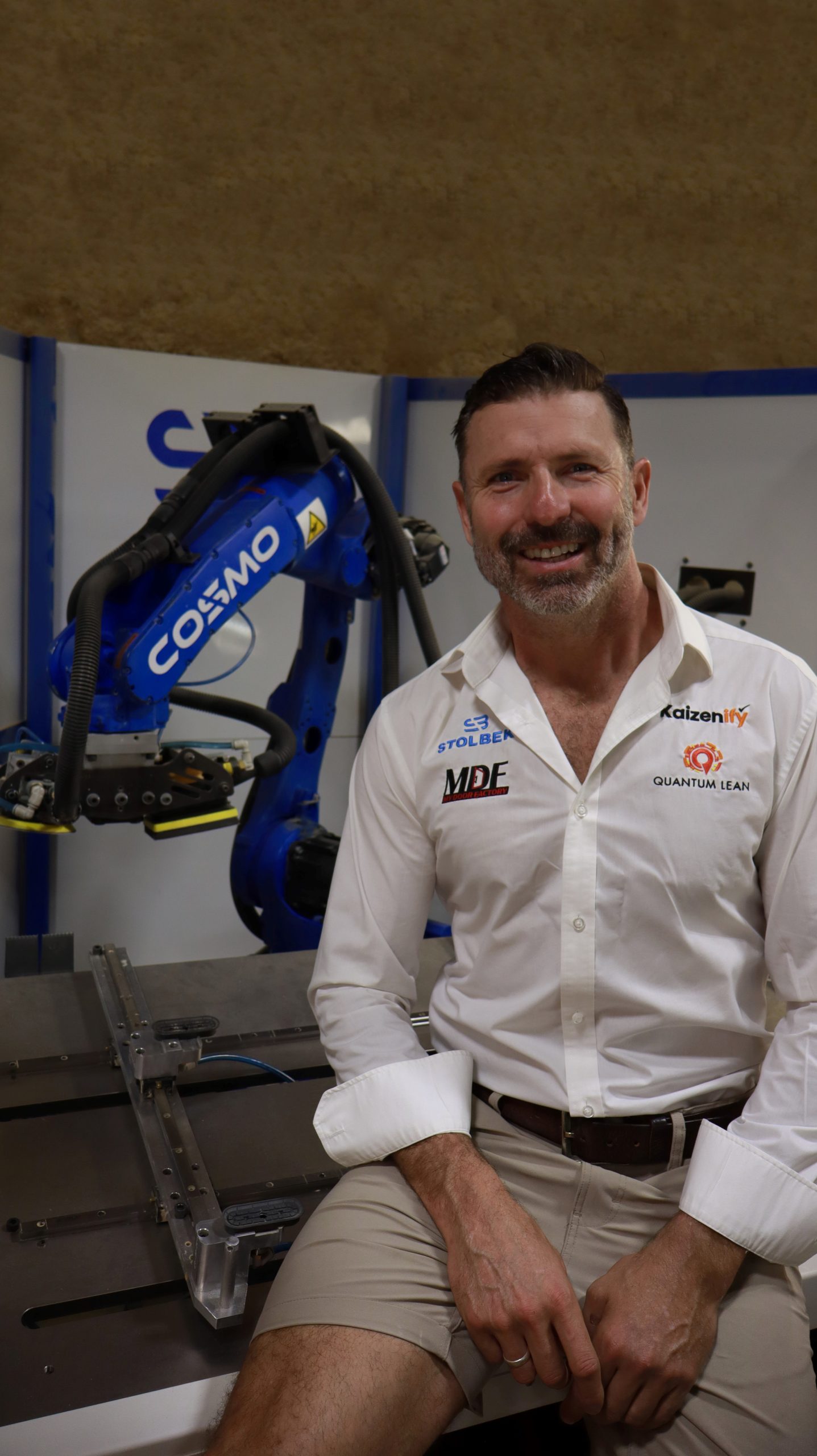
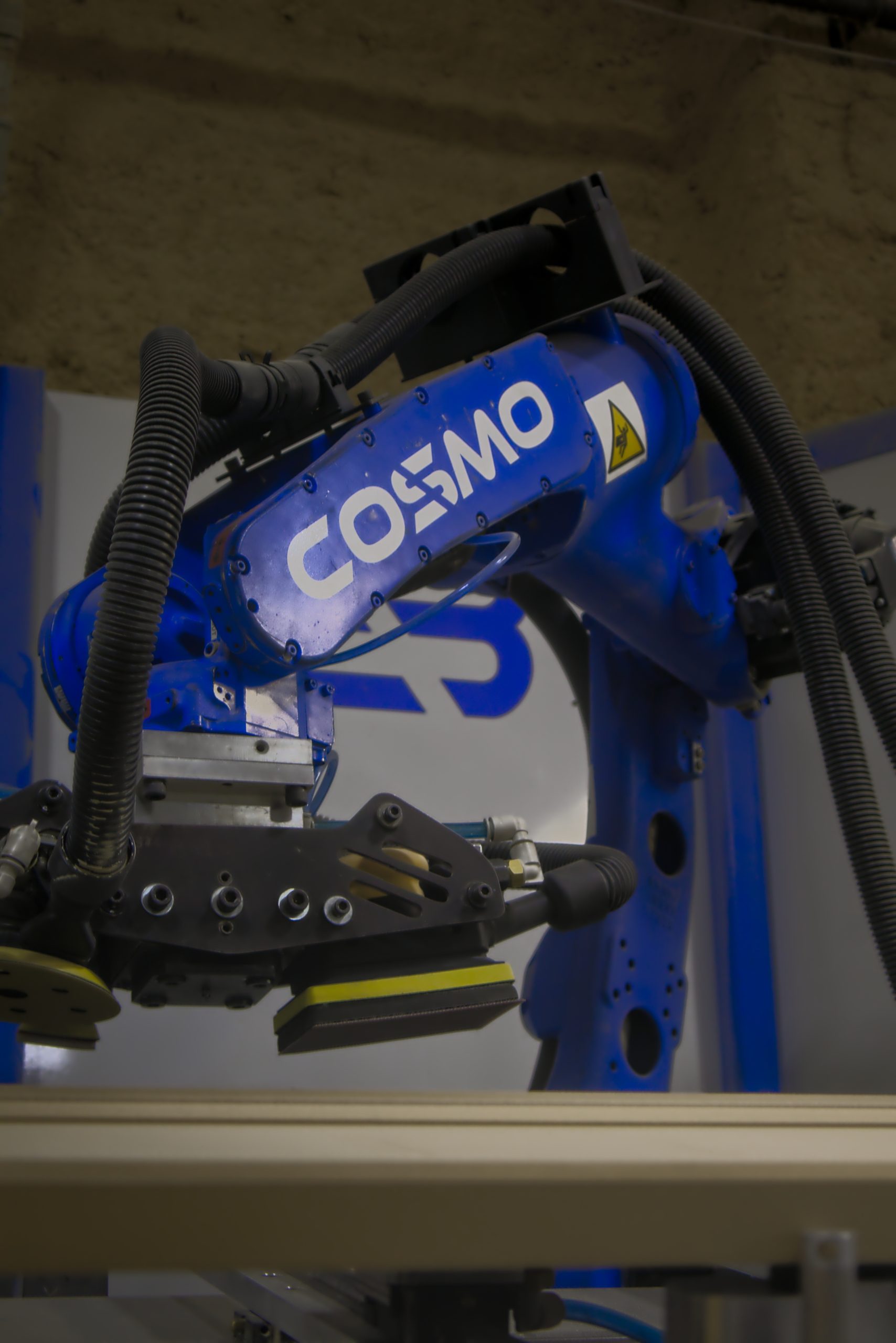
Cairns’ measurement discipline also shaped the company’s move into automation. My Door Factory offered priming, and at one point Cairns had 12 people sanding primer. The work was dusty, repetitive and difficult to staff. He describes the sight of a line of people sanding in masks as one of the most difficult and depressing experiences in the shop. The company decided to solve the problem internally. Cairns mortgaged the building and put money into research and development for a sanding robot.
The technical problem was not just moving abrasive over a surface. Primer sanding requires judgment. A human can feel and see the difference between removing enough material and sanding through. Teaching a machine to avoid sanding through primer took about two and a half years, according to Cairns. Once the robot worked in his own factory, the company showed it publicly. That led to Stolbek machinery sales beyond My Door Factory, and Cairns says the machines are now sold globally. The system is aimed at reducing the sanding workload for shops of different sizes. “We have installed them in factories that do $5M a week down to 1-person shops; story is always the same: sanding sucks.” That idea has also become part of the company’s tagline.
![]() MACHINES DESIGNED FROM THE WOODSHOP OUT
MACHINES DESIGNED FROM THE WOODSHOP OUT
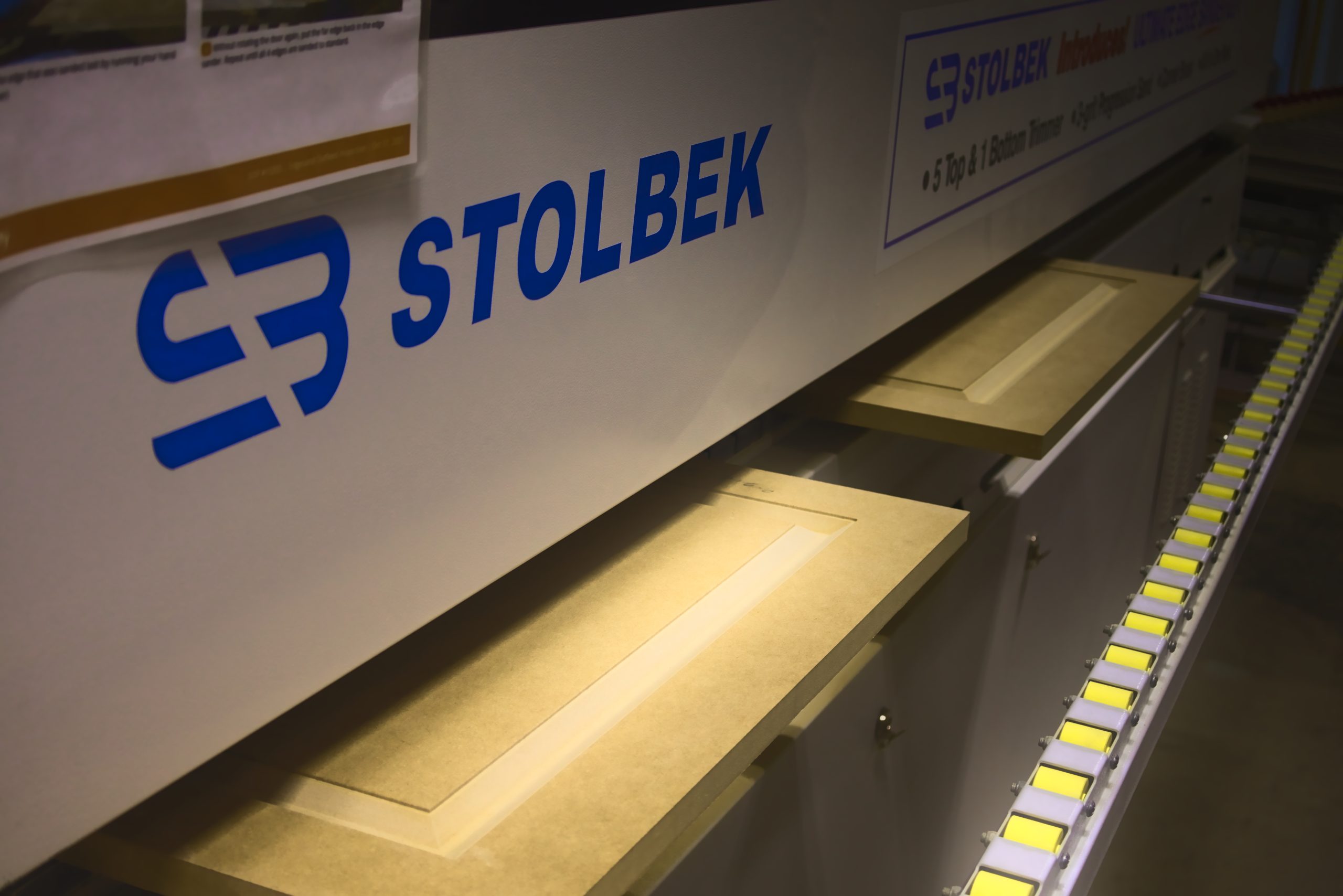
The edge sander followed a similar path. My Door Factory wanted to remove edge sanding from the manual process but could not find a machine that handled the work the way the shop wanted. Cairns questioned why edge sanders were built around belts when workers sanding by hand would normally use palm sanders. The company developed an edge sander using five palm sanders inside the machine, designed around the sanding progression the shop wanted.
That origin explains the difference between Cairns’ machinery business and a more general automation supplier. Stolbek’s machines were not designed first as automation platforms and later adapted to wood. They came from a woodworking production problem. Cairns had sanded for decades before trying to automate sanding. He argues that matters because sanding is often underestimated by people who have not done it.
Building machines also changed how he thinks about return on investment. Cairns says woodworkers often look at the price of a machine and conclude they cannot afford it because the bank account does not contain the full amount. Instead, he suggests that companies compare that cost against the monthly labour already being spent on the task. In sanding, that may mean several employees doing repetitive work that a financed machine could replace or stabilize. He is not dismissing ROI calculations, but thinks many shops fail to count the long-term and peripheral benefits of automation.
The connection between lean practice and automation is important. My Door Factory did not automate to avoid process discipline. It automated after measuring and controlling the process enough to understand where automation would matter. In Cairns’ view, the more robots he puts into the shop, the more money the company makes. That is not a universal rule for every factory, but in his operation it reflects a specific sequence: narrow the product mix, establish flow, measure the work, improve daily, then automate the work that still constrains the system.
![]() DOING THE CUSTOMER’S NEXT STEP
DOING THE CUSTOMER’S NEXT STEP
The same logic extends to customer service. Cairns says the company continually asks what the customer must do next when the product arrives. If the next step is sanding, My Door Factory tries to do the sanding. If the next step is measuring or labeling, the company looks for ways to handle that before shipping. The goal is not to add a small charge for every added service, but to remove waste internally so the added work can be absorbed without raising the price to the customer.
That is the company’s clearest competitive position. It is not only selling MDF doors; it is trying to sell less downstream work. A cabinet shop receiving fully sanded, measured and labeled doors can move those parts into its own process with fewer interruptions. For a customer, the value is not abstract. It shows up in less sanding time, fewer handling steps and cleaner scheduling.
SHARING THE PLAYBOOK
Cairns is open about sharing these systems, even with other manufacturers. He says the information did not originate with him, citing lean thinkers and mentors who shaped his own practice. He also believes many companies will listen but not execute. His stated mission is to prove that woodworkers can make money, and he sees systems, software and machines as tools toward that end.
My Door Factory’s development is therefore less a story about a company discovering one breakthrough than about a shop narrowing its work until the work could be studied closely. Countertops left because they interrupted the door process. Morning improvement stayed because it made daily waste visible. The control point replaced the wandering search for bottlenecks. Sanding robots appeared only after manual sanding became too costly, dusty and difficult to sustain.
The company’s operating discipline is not hidden in a slogan. It is visible in the hour before production starts, in the measurements Cairns expects every shop to understand, and in the decision to keep taking work out of the customer’s hands. For a door supplier, that is a practical form of integration. The factory improves its own process, then uses the gains to absorb the next task the customer would otherwise have to do.
Brad, along with Lynn Thomson (his partner at Quantum lean) have a podcast dedicated to helping woodworkers. Each podcast has an accompanying plant tour, so you can see behind the veil on all these amazing companies. Check it out here.

Tyler Holt is the Editor of Wood Industry / Le monde du bois magazine. He has a master’s degree in literature and publication, and years of experience in the publishing and digital media industry. His main area of study is the effect of digital technologies on industrial and networked production.