
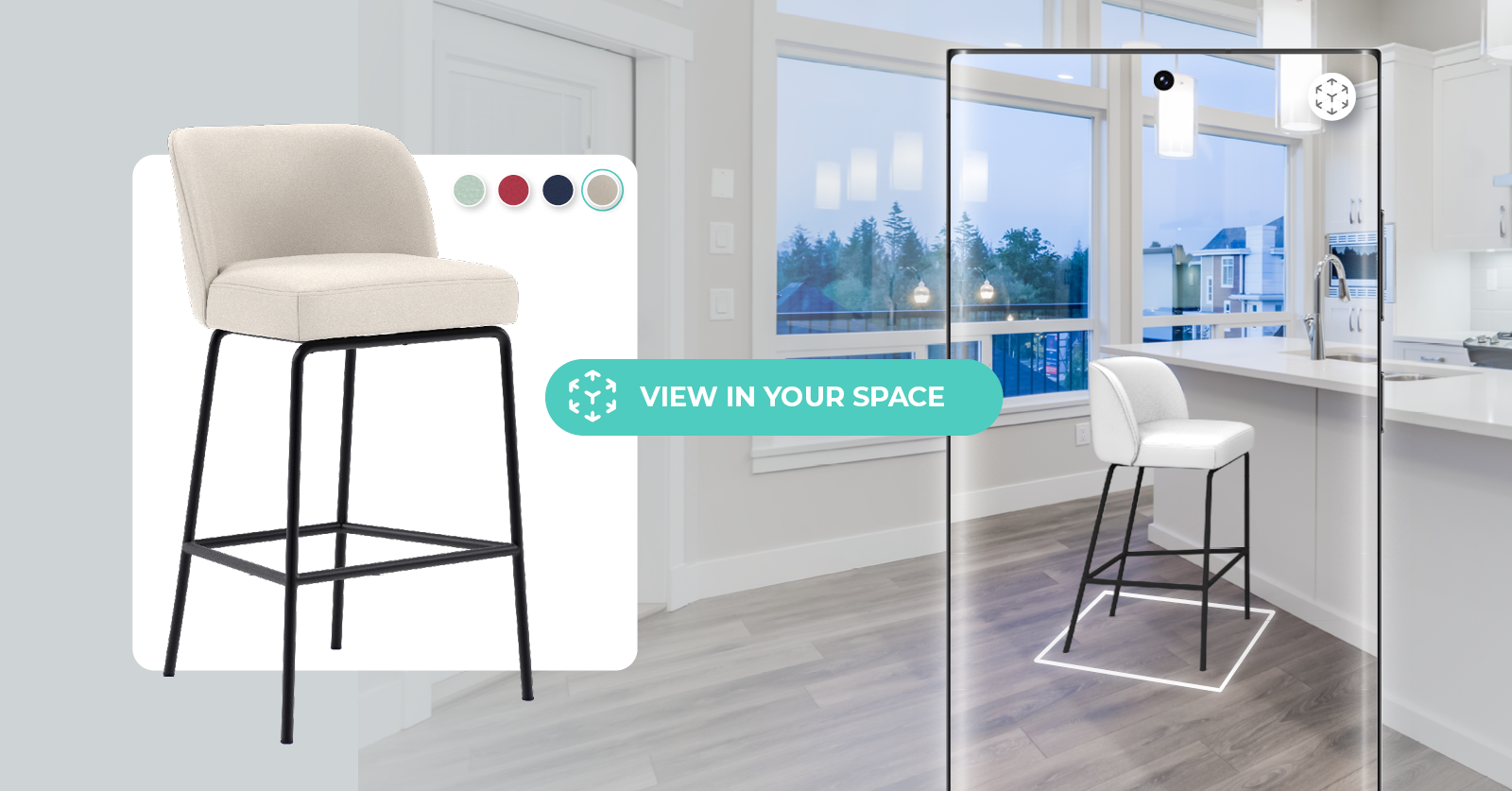
How Digital Product Experiences Are Changing Furniture Selling
The furniture and furnishings market is one of the most competitive and fast-changing categories in digital commerce. Growth in online research and purchasing, rising customer expectations and expanding product assortments have changed how companies present furniture online. Yet it remains a high-consideration category shaped by price, delivery complexity, product configuration and uncertainty around fit, comfort and quality. As a result, strong digital product experiences are increasingly important not only for conversion, but for reducing friction throughout the selling process.
A new report from Cylindo, a software company specializing in 3-D product visualization for furniture and home goods e-commerce, highlights several trends shaping how furniture companies support online product evaluation. Here are the findings.
From Browsing to Confident and Convenient Buying
Detailed and consistent product information remains foundational in supporting online furniture purchasing. Dimensions, materials, construction details, care guidance and delivery expectations all contribute directly to a customer’s ability to assess suitability and value.
Furniture frequently involves layered decisions around size, finish, fabric and configuration. How companies structure these choices digitally has a direct impact on customer confidence, sales efficiency and the number of questions that move back to customer service, dealers or sales staff.
In high-consideration categories, confidence depends not only on the product itself but on the total transaction. Delivery timelines, fulfillment costs, service expectations and return conditions shape perceived risk as much as design or price.
Takeaway: Customers respond most strongly to specificity that is easy to access and interpret. Differentiation increasingly comes not from offering more options, but from making those options understandable and easier to act on. Service clarity has become a core trust mechanism within the product experience.
Visualization Becomes Core Product Experience Infrastructure
Furniture purchasing is inherently spatial, and fit uncertainty remains one of the most persistent barriers to online conversion. As digital channels increasingly replace early-stage showroom visits, visualization has moved from supporting content to core selling infrastructure.
Lifestyle imagery is now a baseline expectation. Products are increasingly presented within realistic environments to help customers assess proportion, placement and aesthetic compatibility before they visit a store, request a quote or place an order.
Takeaway: Visualization is becoming inseparable from confidence-building, helping customers bridge the gap between digital evaluation and real-world fit.
Trust Signals Move to the Product Level
Trust is no longer built primarily through brand-level messaging. It is increasingly established at the product level through concrete evidence.
Companies that perform strongest avoid vague reassurance and instead surface practical trust signals, such as reviews, customer photography, construction details, warranty information and material transparency.
Takeaway: Trust increasingly depends on specificity embedded directly into product experiences.
Omnichannel Execution as a Trust Builder
Despite continued e-commerce expansion, furniture purchasing remains inherently hybrid. Customers often move between online research, showroom validation, dealer conversations and digital follow-up before committing.
Takeaway: Omnichannel execution functions less as channel sophistication and more as a credibility system. Trust is built through alignment between online information, sales conversations, showroom experiences and delivery realities.
Mobile Experience and Convenience as Structural Requirements
As mobile devices dominate furniture browsing, product experiences must perform under constrained conditions. Smaller screens and shorter sessions increase the importance of hierarchy, scannability and usability.
Takeaway: Convenience is increasingly defined by how efficiently customers can evaluate, compare and move forward without friction. Mobile usability is no longer a secondary concern. It is a defining constraint shaping furniture e-commerce design overall.

Clare Tattersall is an interior designer and decorator in Toronto, and the editor of Canada’s floor covering magazine, Coverings and Home Goods Merchandiser.