
From Reference Manual to Operational Tool
Why modern manufacturing requires more than static standards
Most manufacturing inefficiencies in architectural woodwork do not begin in production.
They begin in interpretation.
A specification is read differently by two stakeholders. A hardware expectation is assumed rather than defined. A project team references different versions of the same standard. An estimator interprets a requirement one way while installation crews apply it another.
None of these issues appear significant in isolation. Yet collectively, they create one of the most expensive and persistent risks facing modern manufacturing operations: interpretation drift.
In today’s construction environment, manufacturers are operating within increasingly compressed schedules, tighter margins, more layered contractual structures, and significantly greater scrutiny around compliance and documentation. At the same time, projects are becoming more technically complex, involving advanced materials, integrated hardware systems, delegated design responsibilities, and cross-disciplinary coordination that extends far beyond the shop floor.
The result is an industry where consistency of interpretation matters just as much as quality of execution.
And that reality is changing the role standards must play within manufacturing operations.
For decades, technical standards have functioned primarily as reference manuals — consulted when questions arose or disputes occurred. But in a modern manufacturing environment, standards can no longer operate as static documents sitting on a shelf or buried within folders on a shared drive.
They are becoming operational tools.
That shift is not simply technological. It is structural.
Manufacturers today rely on standards at nearly every stage of project delivery:
- Estimating and bid qualification
- Shop drawing review
- Material and hardware verification
- Quality assurance procedures
- Inspection readiness
- Deficiency resolution
- Compliance documentation
- Staff onboarding and training
When standards are difficult to navigate, inconsistently interpreted, or disconnected from day-to-day workflows, the operational consequences are immediate. Rework increases. RFIs multiply. Internal alignment weakens. Administrative burden grows. Disputes become more difficult to defend.
In many cases, the cost is absorbed long before a formal deficiency is ever identified.
This challenge is becoming even more pronounced as the industry experiences a significant generational transition. Many organizations still rely heavily on institutional knowledge carried by experienced personnel — estimators, project managers, production staff, and installers whose understanding has been developed over decades of practical experience.
But as experienced professionals retire, manufacturers face a critical question:
How is that knowledge transferred consistently and at scale?
If interpretation exists primarily within individuals rather than systems, inconsistency becomes inevitable. Two project managers may apply the same requirement differently. New employees may struggle to locate critical guidance efficiently. Teams working across multiple offices or project sites may unintentionally drift toward different internal standards.
This is where the conversation around modernization becomes far more important than simply “going digital.”
Digital transformation within standards management is not about aesthetics or convenience. It is about operational consistency.
Searchable, dynamically maintained standards allow organizations to reduce interpretation variability by creating a more accessible and unified reference point across teams and project stages. Clarifications become easier to locate. Navigation becomes more intuitive. Information can evolve alongside industry practices rather than waiting for lengthy publication cycles.
Most importantly, accessibility improves adoption.
Emerging professionals entering the industry expect information to function the same way the rest of their professional environment functions — searchable, connected, current, and available in real time. Static PDFs and fragmented reference systems no longer align with how modern teams consume and apply technical information.
If standards fail to evolve alongside the workflows they support, the gap between expectation and usability continues to widen.
This broader industry shift is part of the reason the North American Architectural Woodwork Standards are evolving through the launch of NAAWS 5.0.
The significance of NAAWS 5.0 is not simply that a new edition is being released. The more meaningful evolution lies in how the standard functions within the construction and manufacturing ecosystem itself.
By moving toward a digitally accessible platform, NAAWS 5.0 supports faster navigation, improved usability, and a more responsive framework for future clarification and refinement. Rather than functioning solely as a static reference document, the standard becomes better positioned to support real-world operational workflows across estimating, production, specification review, inspection, and compliance verification.
Importantly, this evolution does not replace craftsmanship.
It protects it.
Architectural woodwork has always been defined by precision, coordination, and accountability. Clear standards strengthen those outcomes by reducing uncertainty before fabrication begins. Accessible standards improve consistency across project stakeholders. Current standards help manufacturers defend the quality and compliance of their work within increasingly complex contractual environments.
As the pace of construction continues to accelerate, the ability to operationalize knowledge will become a defining competitive advantage within manufacturing.
The next generation of industry leaders will not be distinguished solely by production capability or craftsmanship alone. They will be distinguished by how effectively they create alignment across people, systems, processes, and expectations.
Because in the end, standards are no longer just technical references.
They are operational infrastructure.
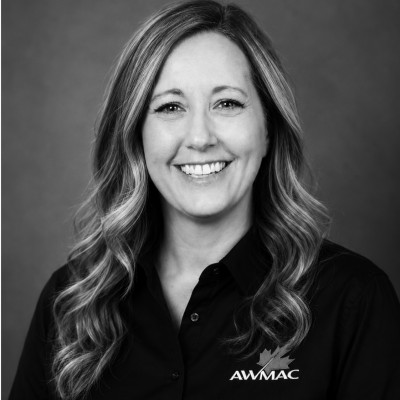 Kasia Robinson is AWMAC’s Director of Standards, Inspections and Insurance, bringing more than 20 years of experience in architectural woodwork. She works with industry stakeholders across Canada to strengthen standards, inspection practices and project quality.