
Custom Cabinetry for Everyday Life at Interior Woodcraft Designs
KEEPING CUSTOM MILLWORK PERSONAL
In custom millwork, repeat customers often tell a deeper story than any showroom could. Interior Woodcraft Designs in Oshawa, Ontario, has been building custom kitchens and millwork for homeowners for four decades, with many clients returning across generations.
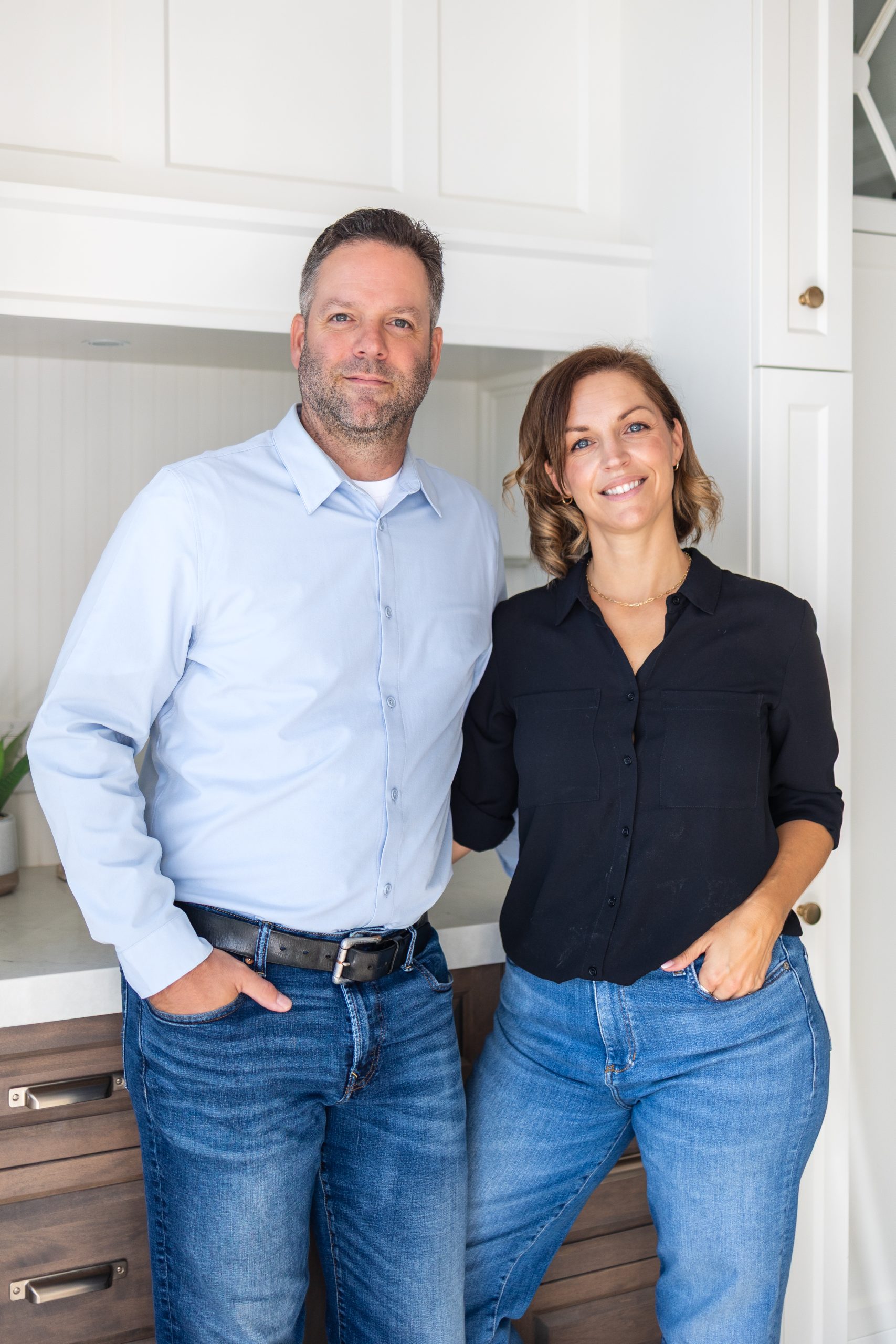
Today, the company is owned by siblings Lindsay Wright and Matt Henderson. The pair purchased the business from its original owners, whom Lindsay had worked alongside for years. Although it is technically a different business entity since Lindsay and Matt took over, Interior Woodcraft Designs has always maintained a business philosophy that involves careful listening and a close synergy between design and fabrication processes.
“We kept the name because it just has such a good history,” she said. “A good name and a good client base. People still come around that we have already done kitchens and other work for years and years ago because they know who we are.”
Many homeowners comparing custom cabinetry with lower-cost prefab alternatives value the consistency that comes from working with the same shop from design through installation. Interior Woodcraft Designs leans into the flexibility and personal touch that a small custom shop can offer.
![]() FROM DESIGNER TO OWNER
FROM DESIGNER TO OWNER

Lindsay Wright’s path into cabinetry was not originally tied to business ownership. After studying interior design at Fanshawe College, she worked in a variety of industry roles, including independent contracting and positions connected to kitchen and bath projects. This work introduced her to Dale Harris, one of Interior Woodcraft Design’s original owners.
At the time, Harris would occasionally send clients to Wright for design-related purchases connected to renovation projects. Over time, the professional relationship developed into a friendship, and eventually into a long-term working arrangement. Wright joined Interior Woodcraft Designs in 2007 and remained there for 13 years before purchasing the company with her brother.
For much of that period, Wright handled nearly all of the company’s design and sales work herself. Because she was already deeply involved in day-to-day operations, the eventual ownership transition felt relatively natural.
“Dale and I used to always laugh that it would be such an easy transition for me to run this business,” she said. “I was kind of doing it anyways.”
Her brother Matt came to the business from a different direction. A longtime general contractor, he had spent years working hands-on in construction and renovations before partnering with Lindsay on various projects. Where Lindsay focused on design and client interaction, Matt brought installation and site experience.
“He’s one of those guys that needed to be in a trade, working with his hands,” Wright explained about her brother’s background.
The siblings had collaborated successfully for years before ownership ever became part of the conversation. When the original owners began discussing retirement, Matt was the one who suggested buying the business together. By that point, the transition felt less like a leap into ownership and more like a continuation of work they were already doing side by side.
![]() SYNERGY BETWEEN DESIGN AND PRODUCTION
SYNERGY BETWEEN DESIGN AND PRODUCTION
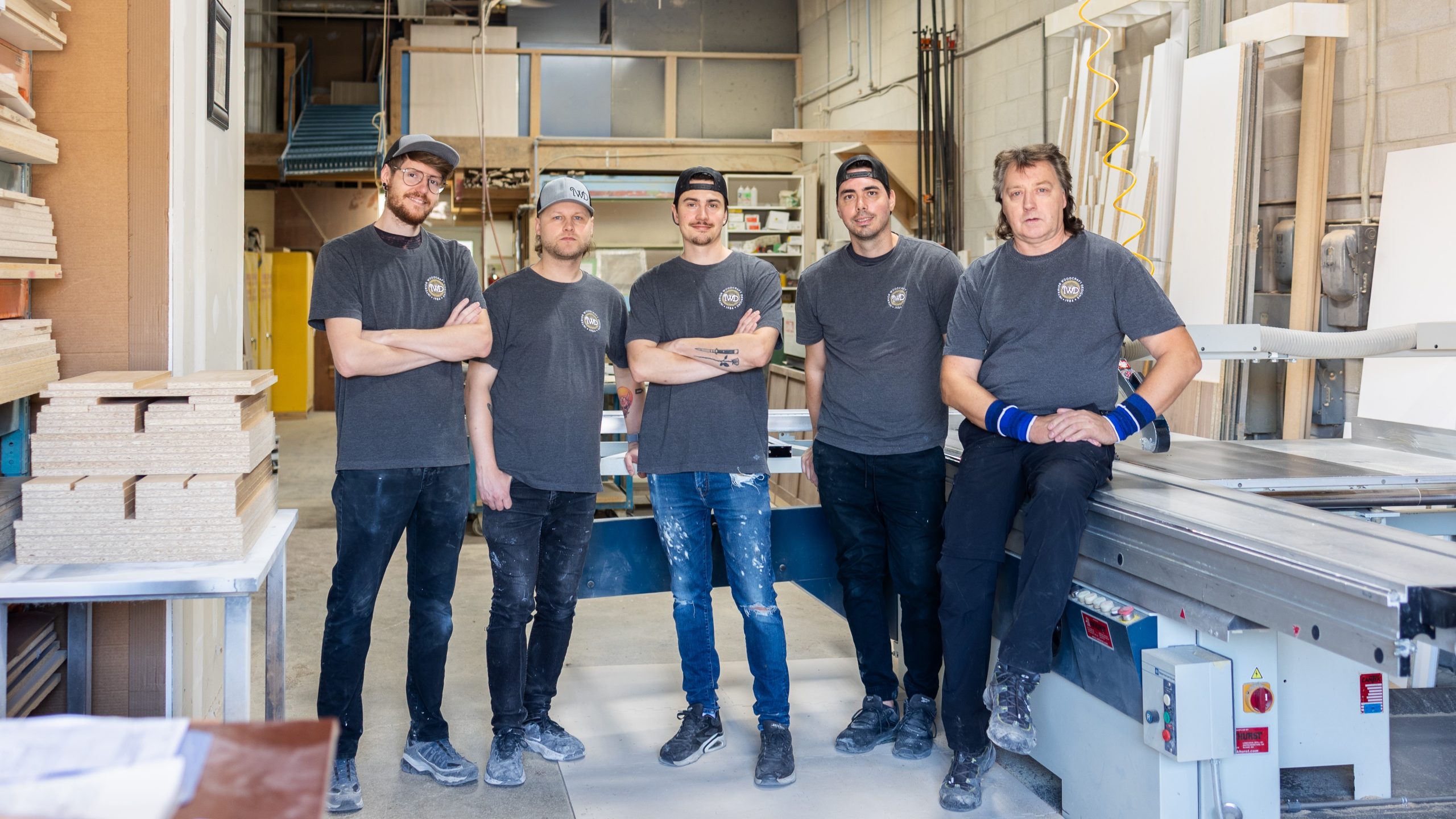
Interior Woodcraft Designs operates out of approximately 6,000 square feet in Oshawa’s south end. The facility includes a small showroom, fabrication and finishing operations, and assembly space. The shop currently operates a CanTek panel saw, Kremlin finishing systems, and dado saws.
The company has continued investing selectively while holding onto methods that have consistently produced dependable results. Wright says, “we joke that at a certain point we won’t be able to get replacement parts for the CanTek saw anymore because we’ve kept it for so long!”
“We still do dado joinery for all of our cabinets and our cabinet boxes because it’s never done us wrong,” she said. “There are certain things that you just don’t change when they work.”
The company’s workflow also reflects a highly collaborative relationship between design staff and shop personnel. Once a project is approved, designers use 2020 Design software to prepare detailed fabrication packages that include floor plans, elevations, 3D renderings, and specialty notes for production staff. Before fabrication begins, the team gathers to review the project together.
The shop’s lead carpenter plays a particularly central role in the process. Wright says everyone playfully refers to him as the company’s “human CNC” because of his ability to execute complex custom work manually.
“There’s no real official training I give to my designers,” Wright explains. “It’s more of a probationary period where we’re just observing and learning from each other.” Wright says this approach helps new staff better understand how design decisions affect fabrication, installation, and customer experience across the entire project lifecycle.
Designers regularly communicate directly with installers and fabricators throughout a project’s lifecycle, especially when unexpected site conditions or custom details arise. The close integration helps preserve the flexibility customers expect from a custom operation.
![]() LISTENING FIRST, DESIGNING SECOND
LISTENING FIRST, DESIGNING SECOND
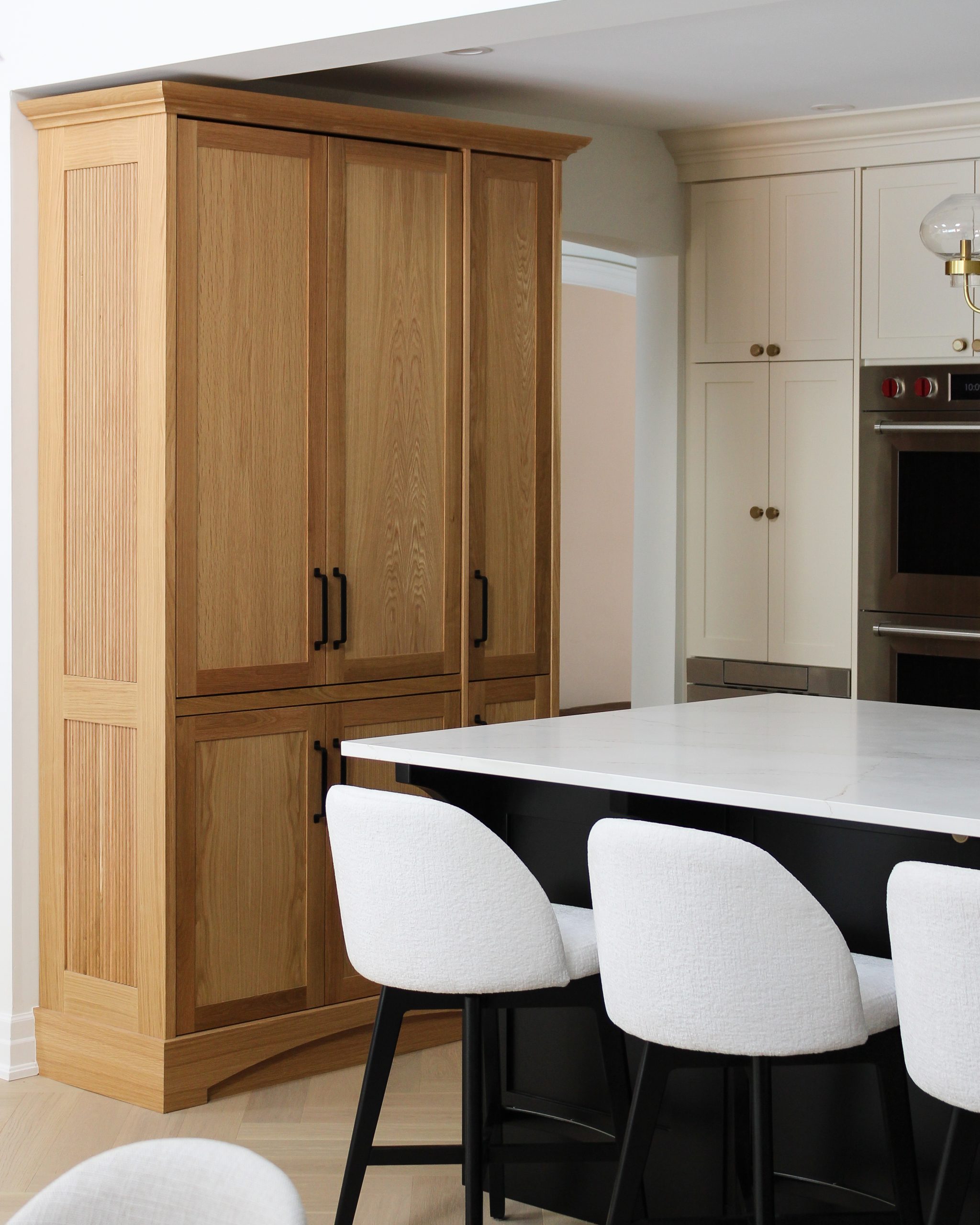
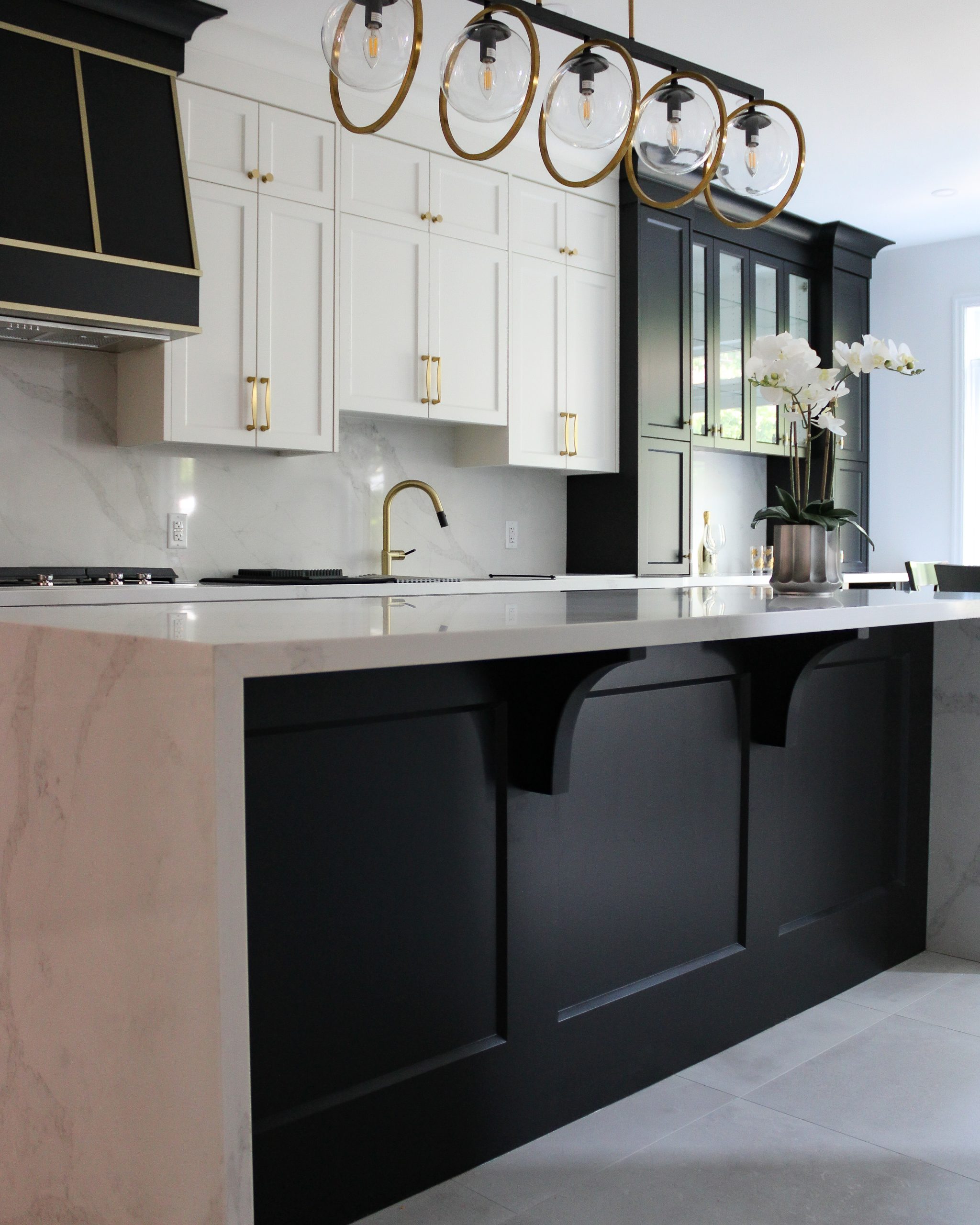
Instead of approaching projects primarily from a stylistic perspective, Lindsay Wright focuses heavily on understanding how clients actually live within their spaces. Conversations about cooking habits, family routines, storage frustrations, and traffic flow all influence the final layout.
“I always say read between the lines and start listening to all the things that don’t work for them,” she explained. Wright noted that the company routinely designs seating areas, specialized storage solutions, and unconventional layouts tailored to specific homes.
The process remains intentionally personal from consultation through installation. Customers often interact with the same people throughout the entire project, including site visits, design revisions, fabrication reviews, and final hardware selections.
Wright believes that consistency is one reason many customers return years later for additional work, whether kitchens, vanities, entertainment units, closets, or bars.
“It’s been generational,” she said. “When you do good work for someone, they do come back.”
![]() PRESERVING HUMAN DESIGN
PRESERVING HUMAN DESIGN
Like many manufacturers and design firms, Interior Woodcraft Designs is also evaluating how newer technologies may affect future operations. Wright said the company is actively considering equipment upgrades to improve production speed while maintaining the intimate small-shop environment customers value. At the same time, she expressed mixed feelings about the growing role of artificial intelligence in design work. Her concerns were less about efficiency and more about the changing role of the designer.
“The design process is long and really takes a while before we get to that place where we have the perfect layout, and to alleviate some of that would be wonderful in some cases. I could probably buy an AI program and have it do all the design for me,” she says. “But that’s my job.” She expresses that an overreliance on automation within the creative process “gets rid of a critical component and changes the human role from creation to just quality assurance.”
STAYING HANDS-ON
As Interior Woodcraft Designs continues evaluating further equipment investments and evolving design technologies, Wright says the company remains focused on preserving the responsiveness and close communication that customers associate with smaller, custom shops. The business’ main prerogative is to create spaces tailored to the routines and priorities of the people using them every day.
Joy Doonan is a writer from Ottawa. She has a degree in Sociology and a certificate in Technical Writing, and she takes a special interest in small business sustainability